

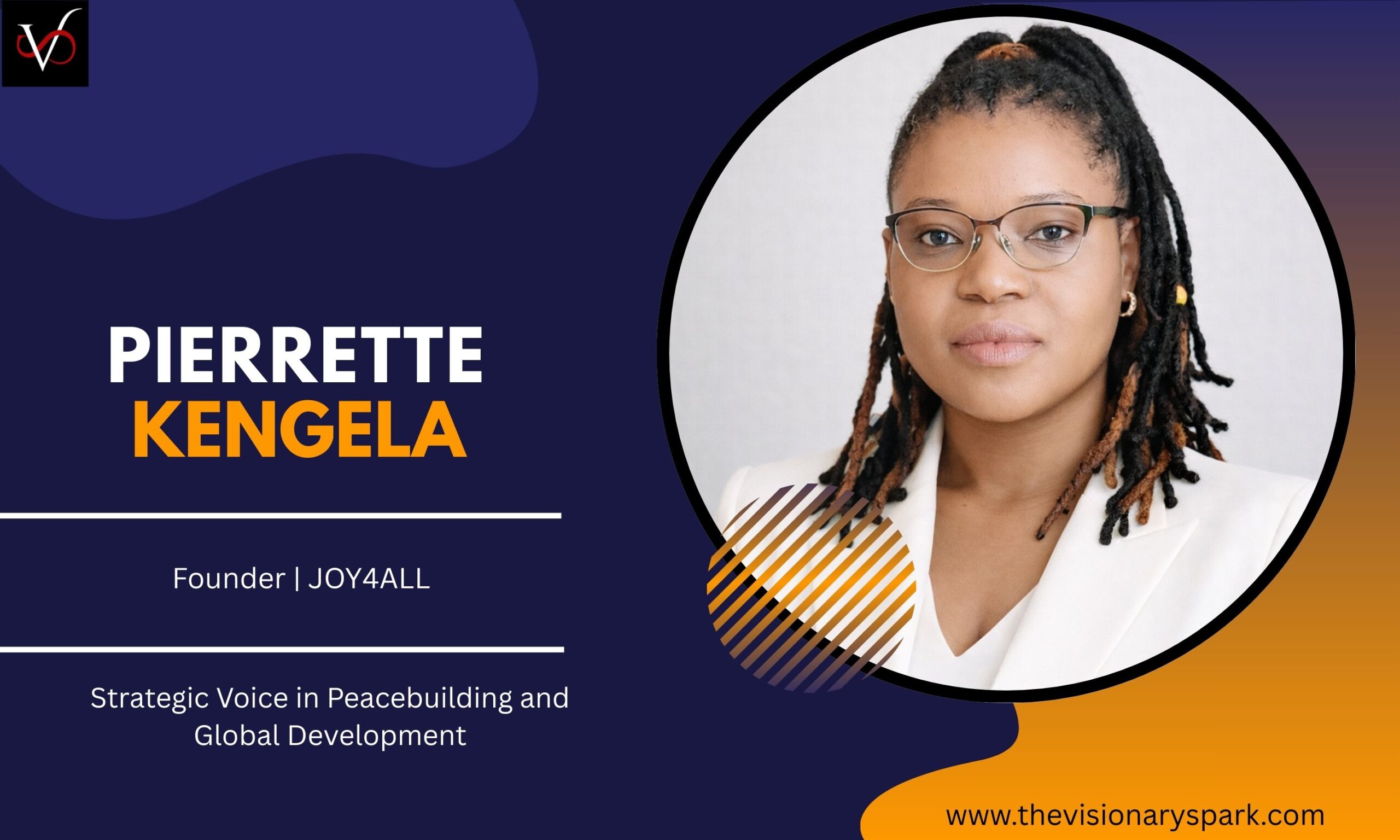
For Pierrette Kengela, the journey into global public health leadership did not begin in boardrooms or policy forums. It began on hospital floors in Kinshasa, Democratic Republic of the Congo, where she worked as a young nurse caring directly for patients and families. Those early years proved formative. They revealed to her the human realities behind the statistics that often dominate global health conversations.
At the bedside, she encountered the deeper forces shaping illness and vulnerability, poverty, gender inequality, fragile health systems, and the quiet resilience of communities navigating adversity every day. What initially appeared as medical cases soon revealed themselves as symptoms of far broader systemic challenges.
Very early in her career, Kengela recognized that many of the issues she was treating clinically were rooted in structural barriers. A young woman suffering complications during pregnancy was not only facing a medical condition; she was confronting barriers connected to education, access to care, gender power dynamics, and public policy failures.
That realization reshaped her path. Rather than remaining solely within clinical care, she felt compelled to work at the level where systems are designed and decisions are made. Public health offered that space. Over time, her work expanded into global health leadership, where she now focuses on strengthening health systems, advancing gender equality, and designing programs that translate policy commitments into tangible services for communities.
Yet, despite the scale of her work today, she often reflects that the nurse within her has never left. That early training continues to shape her leadership approach, one grounded in empathy, precision, and an unwavering respect for human dignity.
A Global Journey Shaped by Communities
Over the course of more than two decades, Pierrette Kengela’s work has taken her across more than 45 countries. The scale of this global journey has provided not only professional opportunity but profound personal learning.
While every country carries its own unique context, she has consistently observed that many of the underlying challenges facing communities are deeply interconnected. Health inequities, gender injustice, violence, and systemic barriers to opportunity often manifest in different forms across regions but stem from similar structural realities.
Some of the most defining experiences in her leadership journey have taken place in conflict and post-conflict environments. In these settings, communities are not only rebuilding infrastructure but also reconstructing trust, dignity, and hope.
In such contexts, leadership cannot rely on authority alone. Instead, it demands humility, listening, and genuine partnership. Kengela has learned that sustainable progress emerges when leaders approach communities not as beneficiaries of aid, but as partners in transformation.
Equally influential have been her collaborations with grassroots organizations. Time and again, she has witnessed how local leaders, particularly women and young people, generate the most creative and contextually relevant solutions. Her role, she often explains, has been to serve as a bridge between global policy frameworks and the lived realities of communities, ensuring that strategies remain grounded in experience.
For Kengela, meaningful transformation happens when evidence, community wisdom, and courageous leadership intersect.
Building Bridges Through JOY4ALL
The creation of JOY4ALL emerged from a deeply personal conviction: that every individual deserves the opportunity to live with dignity, health, and hope.
After many years working within international institutions, Kengela felt a strong calling to establish a platform capable of connecting grassroots communities with global knowledge, innovation, and opportunity. JOY4ALL became that bridge.
Through this initiative, she has focused on advancing youth empowerment, women’s leadership, health equity, and community development. Beyond this flagship platform, she has also launched additional initiatives designed to strengthen institutions and explore innovative approaches to social impact.
These efforts range from digital health solutions and educational platforms to social entrepreneurship and leadership development. At the heart of these initiatives lies a shared vision: creating ecosystems where communities themselves become active architects of their futures.
Rather than imposing solutions from above, Kengela believes that sustainable progress comes from empowering individuals and communities to shape their own paths forward.
The Urgency of Gender Equality and Violence Prevention
Throughout her work, gender equality and violence prevention remain central priorities. For Kengela, these issues are not peripheral concerns; they sit at the very foundation of human development.
When women and girls are denied safety, education, or economic opportunity, societies lose immeasurable potential. Gender-based violence continues to affect millions of women worldwide, leaving consequences that extend far beyond individual trauma. Its impact reverberates across health systems, economies, and social stability.
At the same time, Kengela observes a growing global awakening. Movements led by women and young people are challenging entrenched inequalities and demanding accountability.
The task ahead, she believes, is to move beyond awareness toward structural transformation. Achieving lasting change requires reshaping laws, institutions, social norms, and economic systems so that gender equality becomes not merely an aspiration but a lived reality.
The Power of Global Collaboration
Kengela is equally clear that progress toward women’s empowerment cannot occur in isolation. The challenges shaping the modern world, climate change, health inequities, and economic disparities, are global in nature.
Stronger collaboration across sectors and borders allows societies to share knowledge, scale proven solutions, and mobilize resources more effectively. Partnerships between governments, civil society organizations, academic institutions, and the private sector can dramatically accelerate progress.
Yet for collaboration to be meaningful, representation must also evolve. Women from diverse regions, particularly those from the Global South, must be present in decision-making spaces where global agendas are shaped.
For Kengela, representation is not symbolic; it is strategic. Leaders who understand local contexts bring perspectives that are essential for designing effective and inclusive global solutions.
Turning Policy into Real Impact
While much of her work operates within global policy and governance frameworks, Kengela remains deeply focused on one fundamental principle: policy alone does not create change. Implementation does.
Her work consistently emphasizes the importance of building bridges between policy design and community-level delivery. Achieving this requires collaboration with governments, civil society organizations, and local leaders who translate policy commitments into real programs and services.
Effective monitoring systems, active community engagement, and strong partnerships all play vital roles in this process. When communities themselves participate in shaping and evaluating initiatives, policies become more responsive, more effective, and ultimately more sustainable.
In her view, the success of any policy should never be measured by the number of documents produced, but by the number of lives improved.
The Story Behind Legacy Empowered
Kengela’s book, Legacy Empowered: The Everlasting Rise of Women, reflects a deeply personal dimension of her journey.
Throughout her life and career, she has encountered extraordinary women whose leadership and resilience transform families, communities, and institutions. Yet many of these women remain largely unrecognized.
The book was born from a desire to capture that spirit of quiet yet powerful leadership. For Kengela, women’s empowerment extends beyond individual achievement. It is about building a legacy that uplifts future generations.
She often reflects on the influence of the women who shaped her own life, particularly her mother and grandmother. Their strength and values continue to inspire her understanding of leadership as something intergenerational.
Legacy Empowered therefore serves both as reflection and call to action, encouraging women to embrace their voice, their purpose, and their ability to shape the future.
Women as Architects of Peace
Kengela’s experience in conflict-affected regions has reinforced her belief that women play a critical role in building peaceful and resilient societies.
Research consistently shows that peace agreements are more durable when women participate in negotiation and governance processes. Their involvement often strengthens the sustainability of recovery efforts and community rebuilding.
Beyond formal leadership roles, women frequently serve as connectors within communities, linking families, institutions, and social networks. In times of crisis, they are often the first responders, sustaining families, providing care, and preserving social cohesion.
For Kengela, investing in women’s leadership is therefore not simply a matter of justice. It is a strategic pathway toward sustainable peace and development.
Leadership for a Changing World
Reflecting on leadership in today’s global development landscape, Kengela identifies three essential qualities: courage, vision, and integrity.
Courage is necessary because meaningful change often requires confronting deeply rooted systems and social norms. Vision enables leaders to see possibilities beyond present constraints. Integrity ensures that leadership remains anchored in ethical values and accountability.
Equally important, she notes, is the ability to collaborate. The challenges facing the world today are complex and interconnected. Effective leaders must be capable of building alliances across sectors, cultures, and borders.
Leadership in the modern era is therefore not defined by individual authority but by the ability to mobilize collective action.
Resilience Through Challenge
Working at the intersection of international development, humanitarian response, and social impact inevitably involves navigating complex environments. Political tensions, resource constraints, cultural barriers, and crisis situations often shape the landscape in which decisions must be made.
For Kengela, these challenges have not weakened her resolve but strengthened it. Each experience has deepened her resilience and reinforced her commitment to the mission of advancing equity and justice.
She also credits the many individuals who have influenced her journey, family members, colleagues, and communities across the world. Their determination and strength have continually reminded her why this work matters.
Purpose as a Source of Motivation
Sustaining motivation in high-stakes humanitarian environments requires clarity of purpose. For Kengela, that motivation comes from witnessing impact firsthand.
Whether it is improving access to health services, empowering young people with knowledge and opportunity, or strengthening community resilience, seeing tangible change reinforces the importance of the work.
Faith and personal purpose also play a central role in sustaining her commitment. They serve as reminders that leadership is ultimately about service rather than recognition.
And perhaps most importantly, she continues to draw inspiration from the remarkable individuals she encounters every day, community leaders, activists, and families who persist in pursuing progress despite immense challenges.
A Message for the Next Generation
On International Women’s Day, Pierrette Kengela offers a message rooted in both conviction and hope.
She encourages women and young leaders everywhere to believe in the power of their voice and their vision. The world, she says, needs leaders who are courageous enough to challenge injustice, compassionate enough to uplift others, and bold enough to imagine new possibilities.
Leadership does not begin with titles or positions. It begins with purpose.
Every step taken toward justice, equity, and compassion contributes to shaping a better future. And ultimately, the legacy of leadership is not measured solely by personal achievements, but by the doors opened for those who will follow.