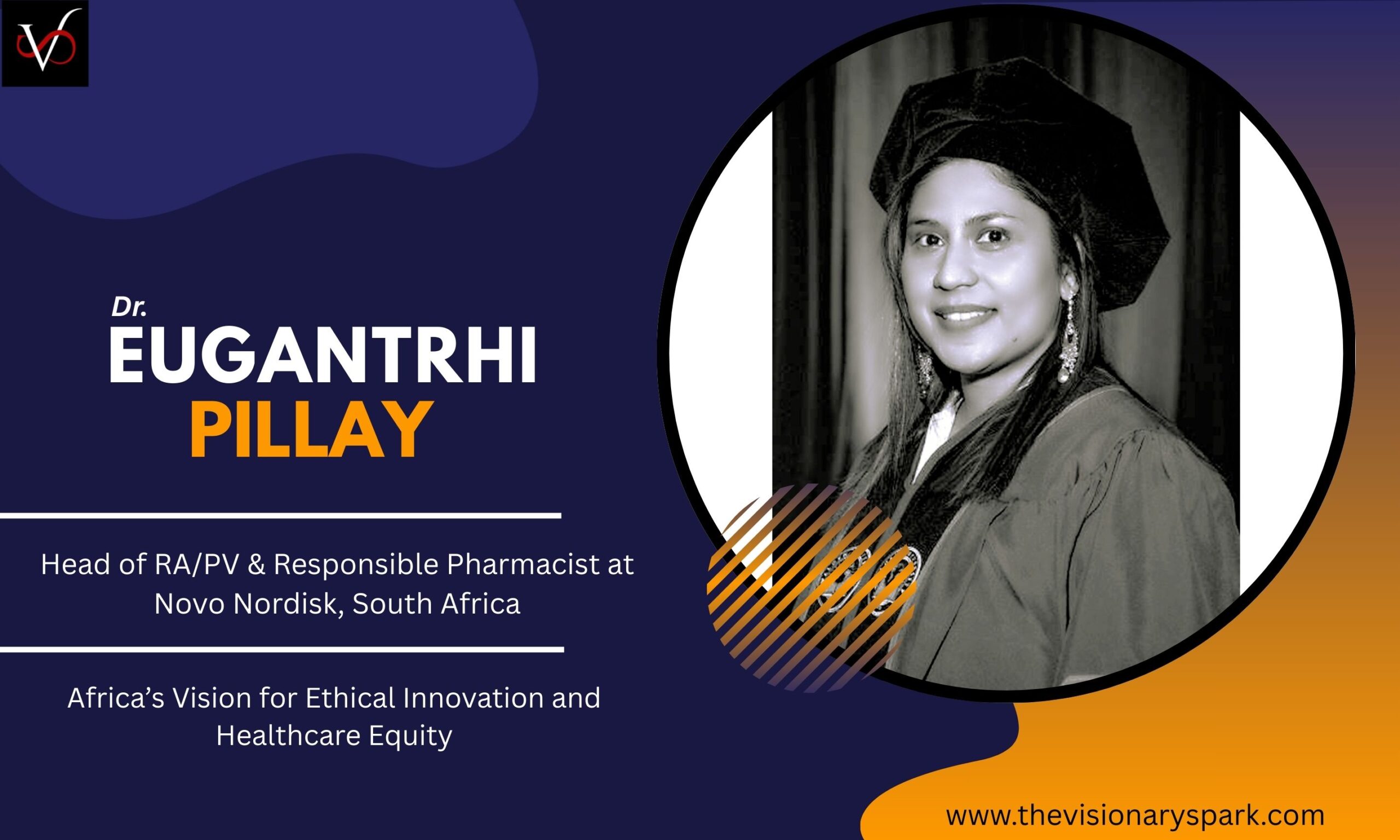
When Dr. Euganthri Pillay reflects on her journey from pharmacist to senior leader in the pharmaceutical industry, she does not describe a linear climb toward corporate leadership. Instead, she speaks of defining moments that repeatedly drew her back to two guiding commitments: improving health outcomes and safeguarding patient safety. These principles became her professional north star.
Her early years in community and hospital pharmacy exposed her to the real consequences of medication-related harm, from preventable adverse reactions and poor adherence to communication gaps that led to avoidable hospital readmissions and patient distress. While individual care was deeply meaningful, these experiences revealed a larger truth: many of the most serious harms were systemic, rooted in fragmented processes and inconsistent standards.
That realisation deepened during her doctoral studies, where public health and population-based thinking reframed her approach to care. Regulation and policy emerged not as constraints, but as powerful tools to protect vulnerable populations and expand access to safe medicines.
Work in medication safety and quality improvement, alongside formative mentorship, reinforced this path. The pharmaceutical industry ultimately brought these strands together, allowing her to apply scientific rigor beyond individual treatment toward strengthening systems that protect millions.
The Power of the Invisible
Regulatory affairs and pharmacovigilance are often described as the invisible pillars of healthcare, essential yet largely unseen. For Dr. Pillay, it was precisely this invisibility, paired with its far-reaching impact, that drew her to the field.
Her commitment to patient safety remained constant, but the scale of influence expanded significantly. In hospital and community settings, she had observed persistent gaps: underreported side effects, unclear labelling, and delayed responses when safety signals emerged. Moving into the pharmaceutical industry provided the tools to address those gaps. Regulatory affairs allowed her to help shape the evidence that determines whether medicines reach the market, while pharmacovigilance enabled systems that collect safety data, identify patterns, and act to minimise harm.
What made this work compelling was its systems-level reach. Where clinical practice allows intervention one patient at a time, regulatory and safety roles influence policies, product information, and surveillance frameworks that affect millions. Pharmacovigilance, she emphasises, is not merely reactive. It is about anticipating risk, detecting signals early, and implementing mitigations swiftly. Regulatory work embeds safety proactively, minimising downstream harm before it occurs.
This work demands humility and collaboration. Meaningful change happens through partnership, translating clinical experience into data, and data into guidance that clinicians and patients can act on. There is, she notes, a quiet ethical satisfaction in making the invisible visible. When a labelling update prevents a serious adverse event or a safety signal is identified early, those victories may go unnoticed, yet they protect real lives.
For Dr. Pillay, regulatory affairs and pharmacovigilance offered a way to honour the core promise of pharmacy on a larger stage. It is why her work at Novo Nordisk® South Africa continues to be guided not by visibility, but by impact, integrity, and purpose.
Building Expertise and Rising into Leadership
When Dr. Euganthri Pillay reflects on nearly two decades across regulatory affairs, quality, and pharmacovigilance, she is clear about the phase that most shaped her leadership. It was her years in regulatory affairs, a period that went beyond technical mastery to instil habits of thinking, discipline, and perspective that continue to guide how she leads today.
Regulatory affairs required translating scientific ambition and commercial intent into frameworks that external authorities would accept. This discipline trained her to think several steps ahead, anticipate stakeholder expectations, and build narratives able to withstand scrutiny. Over time, it enabled her to pre-empt resistance, identify risks early, and design solutions that were both credible and durable. As a leader, this resulted in fewer surprises, faster decisions, and stronger trust with internal teams and external stakeholders.
Navigating regulatory environments also strengthened her ability to communicate across audiences. Regulators demand precise technical evidence, yet respond to context and trust. Balancing these dynamics sharpened her capacity to translate complex data for non-technical leaders, align cross-functional teams around a shared dossier, and maintain productive external relationships. This ability to bridge perspectives, she believes, lies at the core of effective leadership.
Risk-focused and deadline-driven, regulatory work taught her how to safeguard quality and compliance without constraining innovation. Standardised workflows and escalation pathways mattered, but so did psychological safety. Helping teams understand why structure exists and encouraging early issue escalation proved essential to reliable performance under pressure.
These lessons carried into her later roles, reshaping how she thinks about risk, systems, and people. Regulatory affairs did more than build skills; it taught her to expect complexity, design for resilience, and lead with confidence under scrutiny, qualities that define the leader she is today.
A Global Education, A Grounded Perspective
Dr. Pillay’s academic journey across four countries did more than expand her knowledge. It reshaped how she understands healthcare, equity, and leadership, not only intellectually, but in how she shows up as a professional and as a human being.
Her foundation was built in South Africa, where a Bachelor of Pharmacy degree instilled lessons in humility and practicality. Working in resource-constrained environments revealed how creativity becomes essential when systems are stretched, grounding her belief that solutions must work where resources are limited and that empathy for patients and frontline workers is non-negotiable.
An MBA in Athens broadened her perspective, introducing her to the interplay between markets, policy, and access to care. She learned the language of pricing, market access, and strategy, strengthening her ability to bridge clinical priorities with commercial realities and adapt across cultures.
Her doctoral studies in the United States deepened her commitment to public health and equity, sharpening a question that continues to guide her leadership: when outcomes improve, who benefits, and who does not?
Management studies at Oxford added practical tools, reinforcing that strong ideas require thoughtful implementation. Together, these experiences shaped a grounded, human view of leadership, anchored in listening, adaptability, and placing equity at the centre of every decision.
From Technical Expert to Strategic Steward
The transition from technical expert to strategic leader marked one of the most defining shifts in Dr. Pillay’s career. Where technical roles rewarded certainty and precision, leadership at a national level demanded comfort with ambiguity and a focus on outcomes.
Her questions began to change. Instead of asking whether submissions met regulatory requirements, she examined how regulatory strategies could improve patient access and which pharmacovigilance systems genuinely reduced harm in real-world use. Her work moved beyond execution toward shaping population-level outcomes and translating scientific rigour into public health impact.
This evolution required making decisions with imperfect information. As policy, stakeholder expectations, and healthcare systems shifted, uncertainty became an opportunity to apply scientific judgment in a broader context.
Equally significant was her shift from doer to enabler. Leading meant investing in people and scalable processes so teams could deliver with autonomy and integrity. Strategic leadership also required stepping beyond regulatory boundaries to engage with market access, development, manufacturing, and policy, balancing safety, timelines, and viability with empathy and collaboration.
Compliance remained her foundation, but her role evolved into visible advocacy, translating technical nuance into clear narratives and fostering cultures where concerns could be raised. Leading nationally expanded her time horizon and reshaped her purpose, from executing expertly to stewarding systems that improve health at scale.
Balancing Compliance, Speed, and Innovation
In an industry often defined by tension, where regulatory compliance is positioned as the counterweight to speed and innovation, Dr. Euganthri Pillay has consistently challenged that narrative. In her experience, when approached thoughtfully, regulatory rigour and rapid innovation do not compete; they reinforce one another.
Central to this belief is early and meaningful scientific engagement with regulators. By involving regulatory authorities at the outset, she has been able to de-risk development strategies and reduce approval timelines without compromising standards. She approaches regulators not as gatekeepers, but as partners in advancing public health objectives. Proactive dialogue, transparent submissions, and timely responses build trust, and that trust often shortens review cycles.
Equally critical is what happens inside the organisation. Dr. Pillay has seen how breaking down silos between regulatory affairs, quality, pharmacovigilance, and commercial teams improves both speed and compliance. When regulatory thinking is embedded early and cross-functional teams share accountability, innovation moves forward with clarity rather than correction.
She also leverages accelerated regulatory pathways, including reliance models, that balance rigorous evidence requirements with efficiency. These frameworks do not lower standards; they enable smarter evaluation.
For Dr. Pillay, sustainable speed is not measured by internal milestones, but by how quickly safe, effective, and compliant medicines reach patients. When rigour and collaboration are embedded from the start, innovation becomes both faster and more reliable.
Lessons from Collaborative Regulation
Dr. Pillay’s work with the national health authority reinforced a principle she considers foundational: speed and safety are not mutually exclusive when systems are designed around collaboration, transparency, and patient-centricity. Accelerating access to breakthrough therapies requires more than procedural efficiency; it demands trust, capability, and shared purpose.
One of the most important lessons for healthcare systems is the value of early engagement with key stakeholders. Open dialogue allows potential challenges to be identified and addressed before they become barriers. Equally critical is strengthening regulatory capacity through sustained investment in people, training, and digital infrastructure. Without these foundations, even well-designed frameworks struggle to deliver impact.
Transparency and clear communication sit at the centre of this collaborative model. When expectations, evidence requirements, and timelines are clearly defined, regulators and industry can work more efficiently and responsibly. Dr. Pillay also highlights the role of international collaboration and accelerated pathways, including reliance models, in improving access without compromising safety.
Finally, embedding patient and clinician perspectives ensures regulatory systems remain anchored to real-world needs. For Dr. Pillay, collaboration is not an idealistic concept but a strategic imperative, one that enables faster access to life-changing therapies while upholding the highest standards of safety and public trust.
Research, Access, and Social Responsibility
For Dr. Euganthri Pillay, insulin affordability in South Africa was never an abstract research question. It was a lived reality encountered daily in clinics, pharmacies, and communities, long before it became the focus of her doctoral work. Patients arrived with preventable complications, rationed insulin they could not afford to replace, or missed care because transport costs forced impossible choices.
These experiences shaped the foundation of her research. Rather than simply describing the problem, she set out to generate evidence that could influence policy and practice. Her aim is to support policies that reduce costs, expand access to affordable insulin, and strengthen education for clinicians and communities.
Equally central is her commitment to listening. Solutions, she believes, must reflect lived experience. Guided by the conviction that insulin access is a medical necessity, her work seeks tangible impact, measured by lives protected and dignity preserved.
Redefining Leadership in Public Health Policy
Dr. Pillay sees the role of pharmaceutical leaders evolving rapidly, particularly in emerging markets where healthcare systems face complex, interconnected challenges. Leadership, she believes, must extend beyond commercial success to include measurable contributions to public health outcomes, especially prevention, access, and equity.
In these settings, leaders are increasingly called upon to prioritise interventions that reduce disease burden while addressing structural barriers such as affordability and availability. This shift demands more collaborative policy development, where industry expertise is applied responsibly to support evidence-based formulary design, procurement strategies, and system efficiency, always aligned with public health priorities.
Digital health and telemedicine are also reshaping care delivery, requiring leaders to embrace data-driven and technology-enabled approaches. At the same time, Dr. Pillay underscores the importance of local manufacturing where feasible, strengthening supply security while supporting economic development and long-term resilience.
Regulatory fragmentation remains a significant challenge. Navigating diverse regulatory environments calls for harmonisation efforts, capacity building, and leaders comfortable working across borders and disciplines. Ultimately, Dr. Pillay believes pharmaceutical leaders must act as true partners in public health, building capabilities in policy engagement, evidence generation, and cross-sector collaboration to drive equitable access and stronger health systems.
Leadership, Teams, and Inclusion
For Dr. Euganthri Pillay, leadership has never been about titles or hierarchy. At its core, she sees it as a responsibility to both people and purpose, an act of stewardship grounded in trust. Colleagues rely on leaders to create environments where good work can happen and learning can flourish. Every decision she makes, from setting priorities to offering feedback, is shaped by the obligation to honour that trust.
She believes effective leadership requires a balance of competence, humility, and integrity. It means listening before advising and being willing to change course when evidence or experience points to a better way forward. People leadership, in her view, is fundamentally relational. Success is measured not only by outcomes, but by whether individuals feel seen, safe to speak up, and supported in their growth. High-performing teams emerge when diverse perspectives are actively invited and aligned toward a shared purpose.
Ethical stewardship is equally central to her leadership philosophy. In a sector where decisions directly affect patient health and public trust, moral clarity is non-negotiable. Leadership, she believes, is also deeply human. By allowing appropriate vulnerability, she creates space for authenticity, enabling resilience and creativity to take root within teams.
Navigating Barriers with Intention and Resolve
Leading in a highly regulated, traditionally male-dominated sector has presented real challenges for Dr. Pillay. She encountered environments where decision-making moved slowly, leaving little space for alternative leadership styles. For women, these settings often intensified the expectation to continually prove competence, while key conversations frequently occurred in informal spaces that limited visibility and access to strategic opportunities.
What enabled her to move forward was a disciplined approach to growth and influence. She invested deeply in technical credibility and continuous learning, staying current with regulatory trends and market dynamics so she could translate complex constraints into clear strategic choices. This foundation ensured her voice carried weight where decisions were made.
Mentorship proved equally critical. Dr. Pillay sought guidance from both men and women who could offer candid feedback, advocate on her behalf, and help navigate complex organisational landscapes. She also built strong peer networks through professional forums, creating spaces where challenges were normalised and collaboration strengthened credibility and influence.
She learned to adapt her communication style without compromising authenticity, pairing data-driven arguments with relational influence through thoughtful questioning and consensus-building. The barriers she faced clarified where to invest her energy. By building expertise and cultivating allies, she ensured that merit guided outcomes, even within imperfect systems.
Creating Pathways for the Next Generation
Having experienced how access, visibility, and advocacy accelerate leadership development, Dr. Pillay is deeply committed to paying that forward. She is intentional about creating structures and behaviours that expand opportunity for the next generation of women leaders in the pharmaceutical industry.
Visibility is one of the most powerful levers she uses. She actively supports women in gaining speaking opportunities and representation in influential forums, including senior leadership and commercial strategy meetings. For her, visibility builds credibility and makes leadership feel attainable to those earlier in their careers.
Mentorship and coaching are equally central to her approach. Dr. Pillay advocates for women when stretch roles and short-term assignments arise, using her influence to open doors to experiences that build cross-functional leadership capability and confidence.
Beyond formal mechanisms, she models inclusive behaviours in daily leadership, soliciting diverse input, recognising contributions publicly, and making decisions transparently. When these behaviours are consistently demonstrated, team dynamics shift and women are more likely to bring their voices into strategic conversations.
For Dr. Pillay, creating space for women leaders is not a one-time initiative but a sustained practice. By opening access, recognising talent, and nurturing development, she helps ensure potential translates into advancement, strengthening leadership pipelines that ultimately benefit both organisations and the communities they serve.
Technology, Ethics, and the Future of Healthcare
For Dr. Euganthri Pillay, the promise of artificial intelligence, big data, and predictive pharmacovigilance is undeniable. When applied responsibly, these tools can significantly enhance patient safety through earlier signal detection, more precise risk prediction, and faster identification of adverse effects. Yet she is clear that technological progress without ethical grounding risks eroding public trust.
Every technological initiative, she believes, must begin with the patient. Regardless of sophistication, the guiding question should remain whose health, safety, and dignity are being served. When patient needs define priorities, innovation remains anchored to purpose.
Data integrity is central to this approach. High-quality, privacy-respecting datasets, robust de-identification, and strict adherence to ethical and legal standards are non-negotiable. Ethical principles must also be embedded into governance and daily practice, supported by early collaboration with regulators.
For Dr. Pillay, success is measured not by tools deployed, but by improvements in patient safety, equity, and trust. When patients remain central, technology becomes an amplifier of ethical care.
Africa’s Next Chapter in Pharmaceutical Transformation
Dr. Pillay sees the next five years as a defining period for Africa’s pharmaceutical sector. What excites her most is the convergence of stronger local manufacturing, smarter regulatory frameworks, and deeper public–private collaboration, shifts that could deliver more consistent access to quality medicines across the continent.
The expansion of local manufacturing stands out as especially transformative. As more facilities achieve international quality standards, supply chains will shorten, dependence on fragile global networks will lessen, and opportunities for skills development and job creation will grow alongside supply security.
She is equally encouraged by progress in regulatory convergence. Regional harmonisation efforts promise faster product registration, reduced duplication, and higher quality standards, enabling quicker access to essential medicines while strengthening oversight.
Yet growth, she stresses, must be matched with responsibility. Equitable access and affordability must remain central, with innovation prioritising essential medicines and neglected diseases. For Dr. Pillay, the true measure of progress will be whether Africa’s momentum delivers safe, affordable medicines to every community, strengthening health systems and improving lives sustainably.
Legacy, Vision, and International Women’s Day Reflection
Being named among the Global 200 Women Power Leaders in 2025 was not, for Dr. Euganthri Pillay, a moment of arrival, but a moment of reckoning. The recognition sharpened her sense of responsibility, reinforcing the need to use influence deliberately, focus on meaningful impact, and create space for others to rise.
At the heart of her reflection is a simple conviction: every decision in healthcare carries human consequences. This belief shapes how she defines legacy, not as personal recognition, but as collective progress. As International Women’s Day 2026 approaches, the legacy she hopes to leave is one grounded in access and equity, ensuring that medicines and innovation reach those who need them most, regardless of income or geography. She wants to be remembered as a leader who delivered value for patients and consistently aligned innovation with affordability.
Her years in corporate leadership have reinforced a critical lesson: purpose cannot be symbolic. It must be embedded into strategy and reflected in daily decisions. Championing partnerships that expand access without compromising scientific integrity has become central to how she measures success. For Dr. Pillay, impact is visible in systems strengthened, barriers lowered, and lives improved.
Her vision of legacy is also personal. She wants younger women to see permission in her journey, permission to hold ambition and family responsibilities together, and to lead without erasing parts of themselves. Representation, she believes, matters because it normalises possibility.
Ultimately, Dr. Pillay hopes her work will be remembered as part of a broader shift toward a more people-centred, purpose-driven healthcare ecosystem. For her, legacy is not about what is claimed, but about what is enabled.