

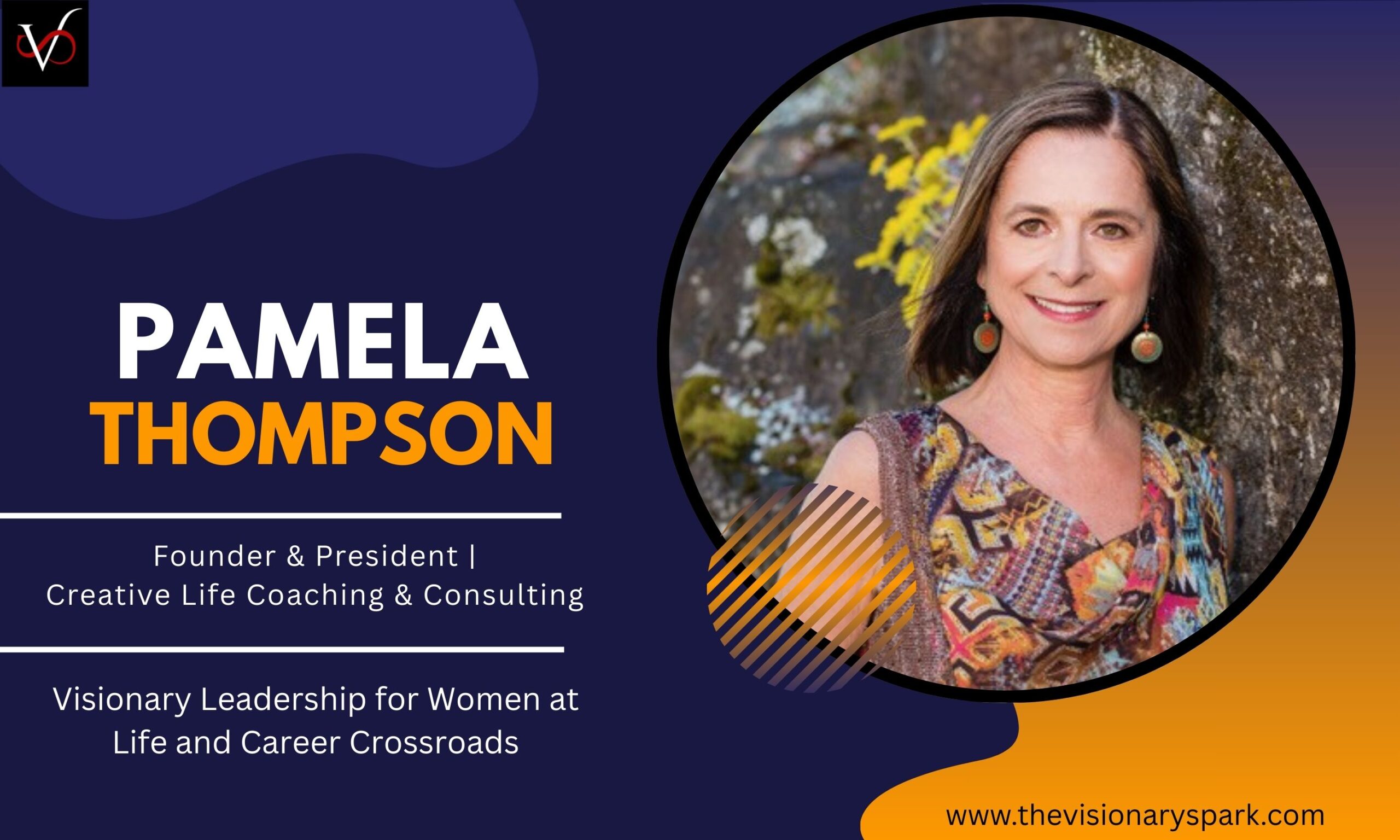
As the world marks International Women’s Day 2026, leadership conversations are evolving, shifting away from power and performance toward purpose, presence, and collective impact. At the heart of this shift stands Pamela Thompson, BN, MSc., a global changemaker whose work spans continents, cultures, and complex systems. Founder and President of Creative Life Coaching & Consulting, and Founder of Female Wave of Change Canada, Pamela has dedicated more than three decades to guiding leaders through transition with clarity, compassion, and courage. A best-selling author and trusted voice in feminine leadership, her journey reflects a deep commitment to shared humanity and conscious change. Through her work and writing, and at www.pamela-thompson.com, Pamela continues to inspire a new paradigm of leadership, one rooted not in control, but in connection.
Origin & Early Inspiration
For Pamela Thompson, the belief that life is an adventure to be lived to the fullest is not a slogan; it is a lived philosophy that has quietly guided every major transition in her life. It is this mindset that has given her the courage to take risks without hesitation or regret, trusting her intuition rather than second-guessing her choices. When she senses that a chapter has run its course, whether a role, an organization, or a particular phase of work, she allows herself to move forward with clarity and confidence.
Rather than forcing outcomes, Pamela describes a rhythm of listening, learning, and then letting possibility unfold. Sometimes that means quite literally “putting it out to the Universe” and remaining open until the right opportunity appears. At other times, it means taking intentional, human steps, reaching out to trusted colleagues, sharing a meal, and asking thoughtful questions. When she aspired to shift from domestic to international consulting, she sought guidance from a friend already working globally, asking who she should speak to next. Earlier, when launching her first consulting business, she invited a consultant she deeply respected to lunch, not to seek shortcuts, but to learn from her lessons and lived experience.
This blend of intuition, curiosity, and relationship-building has become a hallmark of Pamela’s journey. It reflects a leadership style rooted not in rigid planning, but in trust, openness, and the belief that growth happens when we remain willing to explore what lies beyond the familiar.
Leadership & Change
Pamela Thompson’s Art of Change Framework emerged from a deeply held belief that life, much like leadership, is a dance. For her, change is not something to endure or resist. She likens embracing change to a creative process that opens us up to new possibilities. Acknowledging that most of us are hard-wired to fear uncertainty, Pamela intentionally reframed change as something expressive and dynamic. By likening transition to a dance, she introduces a more empowering, and even playful, lens to experiences that are often perceived as destabilizing or overwhelming.
Designed to support people standing at life’s crossroads, the five-step framework helps individuals navigate transition with clarity, confidence, and purpose. Its roots trace back to one of the Seven Keys in her book Learning to Dance with Life: A Guide for High Achieving Women, specifically the principle of learning from and embracing life transitions. The framework is also deeply informed by more than 25 years of global consulting and coaching work across five continents, as well as Pamela’s own lived experience of navigating profound personal and professional change.
Since 2009, she has coached leaders and individuals through moments of reinvention, whether change was consciously chosen or unexpectedly imposed. Over time, the Art of Change Framework has evolved into a practical and proven pathway for moving forward, offering structure without rigidity and guidance without diminishing personal agency. It stands today as both a philosophy and a tool, grounded in experience and designed to help people step into what comes next with intention.
When asked about the most urgent leadership gap she sees today, Pamela points to a systemic imbalance that continues to undermine collective progress: the tendency to reward individuals over teams. In her view, many of today’s most pressing challenges, from climate change to systemic racism, are far too complex to be solved by singular voices or isolated leadership. They demand diverse perspectives, shared accountability, and many minds working together.
By prioritizing individual achievement, organizations often unintentionally foster competition instead of collaboration. Pamela believes true leadership lies in recognizing the power of teams, valuing diversity of thought, and creating environments where people can work together toward a shared purpose. When collaboration is genuinely supported and rewarded, she argues, it unlocks the kind of collective intelligence required to address the world’s most complex problems, and to do so sustainably.
Feminine Leadership
For Pamela Thompson, authentic feminine leadership is not defined by title or position, but by how leadership is practiced in everyday moments, decisions, and relationships. She describes it as a way of leading that restores balance to systems long shaped by hierarchy, competition, and control, and replaces them with connection, presence, and shared purpose. In her view, authentic feminine leadership shows up through a set of deeply human qualities that are both timeless and urgently needed today.
- An authentic feminine leader is collaborative. She believes in collaboration and actively models it, understanding that the most meaningful outcomes emerge when people co-create rather than compete.
- An authentic feminine leader is inclusive. She recognizes the importance of having different races, religions, and ethnic groups represented at the table, not as a symbolic gesture, but so their voices are genuinely heard, understood, and reflected in both the process and the outcome.
- An authentic feminine leader is compassionate. Pamela emphasizes that compassion begins within. To lead others with empathy and care, leaders must first be kind to themselves and extend inward the same grace they offer outward.
- An authentic feminine leader is intuitive. She makes decisions not only with her mind, but with her body, listening to the wisdom of the heart and the gut alongside rational thought.
- An authentic feminine leader is emotionally intelligent. She is aware of her own emotions and attuned to the emotions of others, allowing her to respond thoughtfully rather than reactively.
- An authentic feminine leader is creative. Especially in times of uncertainty, she draws on both hemispheres of the brain. The right brain contributes creativity, emotion, and big-picture vision, while the left brain brings structure, logic, language, and clarity. Together, they create leadership that is both imaginative and grounded.
Pamela believes these principles are not simply aspirational; they are essential for the future. Many of the most critical challenges facing the world today stem from outdated paradigms that no longer serve us. These include valuing logic over intuition, leading from ego rather than heart, rewarding individuals over teams, undervaluing collaboration, defining difference through race, religion, or nationality, and behaving as though the planet’s natural resources are infinite.
She believes authentic feminine leadership holds the key to addressing these challenges and to creating what she calls a world that works for everyone, one that is more conscious, equitable, just, sustainable, and peaceful.
When asked why feminine leadership matters now, Pamela points to both lived experience and evidence:
- Lessons from history: When women are involved in decision-making and politics, outcomes tend to be more inclusive and positive.
- Lessons from COVID-19: Women political leaders demonstrated rapid, effective responses rooted in feminine energy and values, such as empathy, clear communication, and collective wellbeing, with examples including New Zealand’s Prime Minister and British Columbia’s Provincial Medical Officer of Health.
- Reaching a meaningful threshold matters: A global analysis by the Peterson Institute for International Economics found that companies approaching approximately 30 percent women in senior leadership experienced measurable improvements in net margins, highlighting the importance of moving beyond tokenism toward genuine inclusion.
- Diverse leadership fuels innovation: Research from Boston Consulting Group shows that organizations with more diverse leadership teams generate higher revenues from innovation. Feminine leadership qualities like collaboration, curiosity, and systems thinking help create environments where innovation can thrive.
- Gender-balanced boards strengthen governance: Studies by MSCI indicate that companies with higher female representation on boards tend to demonstrate stronger return on equity and governance practices, while acknowledging that these results are correlational rather than strictly causal.
- A broader leadership evolution: Across global studies, gender diversity consistently aligns with cultures that value listening, long-term thinking, and shared responsibility, all core aspects of feminine leadership. Together, these qualities expand how leadership is practiced and help organizations navigate complexity with greater resilience and wisdom.
For Pamela, the moment is clear. The world is ready to examine lessons from the past, release beliefs and structures that no longer work, and explore new paradigms of leadership. She is careful to emphasize that feminine leadership is not about gender. Men, as much as women, can embody and develop these qualities. What matters is the choice to lead in ways that honor humanity, foster connection, and contribute to a better world for all.
Global Perspective
Living and working across five continents has profoundly shaped Pamela Thompson’s leadership, grounding it in resilience, humility, and deep human connection. Her international experiences, often in complex and high-pressure environments, have offered powerful lessons that continue to inform how she leads, facilitates, and supports others through change. She describes these insights as essential leadership principles for growth, particularly in times of uncertainty.
- Embrace Our Shared Humanity
Across countries, cultures, and belief systems, Pamela observed a universal truth: regardless of skin color, ethnicity, or religion, people seek the same fundamental things, love, respect, safety, and a sense of belonging. For her, effective leadership begins with honoring this shared humanity. When leaders truly listen, treat people with dignity, and create space for understanding, trust follows. That trust becomes the foundation for collaboration, commitment, and collective progress. - Stay Flexible and Open to Possibilities
While planning is important, Pamela learned that adaptability is equally vital. Unexpected moments often carry hidden opportunities, if leaders are willing to remain open. During her work in Afghanistan, a sudden shift in expectations required her to rethink her approach. After meeting with the Minister of Public Health, she was asked to provide recommendations to improve policy and planning, a request beyond her original mandate. Rather than offering a top-down report, Pamela chose a participatory path. She interviewed fifteen senior leaders within the Ministry, gathering their insights on strengths, weaknesses, and areas for improvement, and then integrated her own expertise into a collective set of recommendations. The result was not only a stronger report, but a process that built ownership and trust within the system. - Co-Create and Communicate a Shared Vision
Pamela believes a shared vision can unite people even in deeply divided contexts. While leading a project in Nigeria, she facilitated collaboration across cultural and religious lines. During a national workshop, participants from two states, one from the Muslim North and the other from the Christian South, shared findings from their local consultations. In a moment that stayed with her, the head of Policy and Planning from the Muslim state stood up and said, “Brothers and sisters, I thought we were so different from you, less educated, more backward, and I believed your challenges and vision would be completely different from ours. Now I realize we are the same. I am so looking forward to working together with you to turn our visions into reality.” For Pamela, this moment captured the power of co-creation and honest dialogue to dissolve assumptions and build genuine partnership. - Prioritize Self-Care
Sustaining leadership in challenging environments requires tending to one’s own wellbeing. In high-stress settings, Pamela learned to prioritize practices such as meditation, yoga, and regular rest. These were not luxuries, but necessities that allowed her to remain grounded, present, and effective. By caring for herself, she was better able to support others with clarity and compassion. - Stay Calm and Grounded During Stress
In moments of crisis, Pamela observed that a leader’s emotional state sets the tone for everyone else. During a workshop in Afghanistan, news of an attack nearby sent waves of fear through the room. By acknowledging the fear while calmly reassuring participants of their safety, she helped the group regain focus and complete the work they had gathered to do. She extends this lesson beyond professional settings, noting that personal upheavals, such as separation or divorce, can also heighten stress. In those moments, staying calm, focused, and grounded at work becomes essential, allowing leaders to make rational decisions and communicate clearly with their teams.
Together, these global experiences have shaped Pamela’s leadership into one that is steady yet flexible, compassionate yet decisive, and deeply rooted in the belief that meaningful change begins with human connection.
Author & Thought Leader
Across her body of work, Pamela Thompson returns to a central truth: life’s transitions, whether consciously chosen or unexpectedly imposed, are powerful invitations to live and lead with greater awareness, courage, and purpose. Her writing does not offer rigid formulas or quick fixes. Instead, it invites reflection, self-honesty, and a willingness to engage with change as a meaningful teacher rather than an obstacle to overcome.
In Learning to Dance with Life: A Guide for High Achieving Women, Pamela speaks directly to women who are accustomed to giving, doing, and achieving, often at the expense of their own inner wellbeing. Many of these women, she observes, know how to succeed externally, yet have never been taught how to sustain themselves internally. Through personal stories, reflective practices, and her Seven Keys to Creative Living, the book gently encourages readers to pause, listen inward, and reconnect with their inner wisdom. It challenges conventional definitions of success and supports women in redefining achievement on their own terms, creating lives that feel balanced, intentional, and deeply fulfilling.
The Exploits of Minerva: Reflections of a Sixty-Something Woman turns its focus toward the richness and possibility that come with lived experience. Written especially with women in midlife and beyond in mind, the book reframes aging as a time of expansion rather than decline. Pamela celebrates the clarity, resilience, and freedom that often emerge in later chapters of life, inviting readers to honour their journeys and recognize that some of their most creative and meaningful contributions may still lie ahead.
In Truths & Contradictions: Life-Changing Experiences in Afghanistan, Pamela invites readers beyond the headlines and simplified narratives often associated with the country. Drawing from her lived experience of working and living there, she offers a deeply human perspective shaped by complexity, courage, and resilience. The book explores leadership through the lens of contradiction, where history, culture, and human connection intersect. Through these stories, Pamela highlights the leadership lessons that arise when we listen deeply, remain open, and lead with compassion, even in the most challenging environments.
Taken together, her books form a cohesive invitation: to trust inner wisdom, meet uncertainty with curiosity, and engage life as a dynamic, evolving dance. Pamela’s message is clear and consistent, true leadership and fulfillment are not found in striving alone, but in living and leading with purpose, compassion, and courage.
Closing
As International Women’s Day 2026 invites the world to reimagine leadership for a more complex and connected future, Pamela Thompson’s journey stands as a powerful reminder that lasting change begins within. Through courage, compassion, and an unwavering belief in our shared humanity, she continues to model what it means to lead with purpose, presence, and wisdom. Her story does not simply inspire; it calls us to step forward, embrace change, and help shape a world that truly works for everyone.