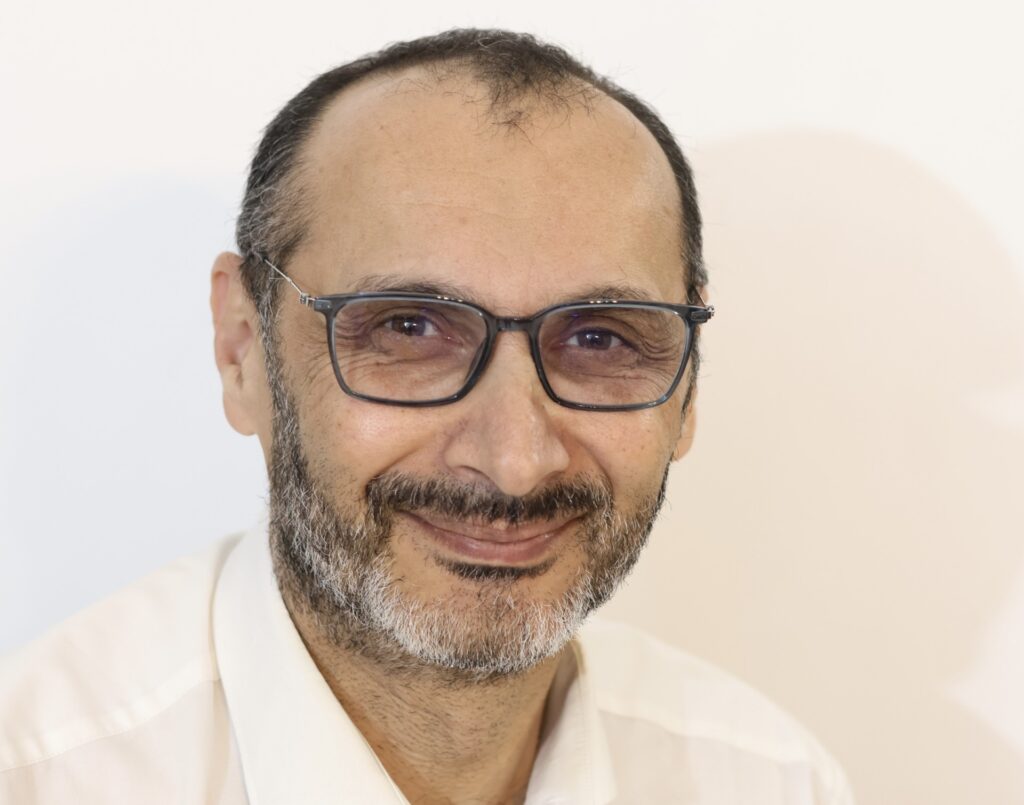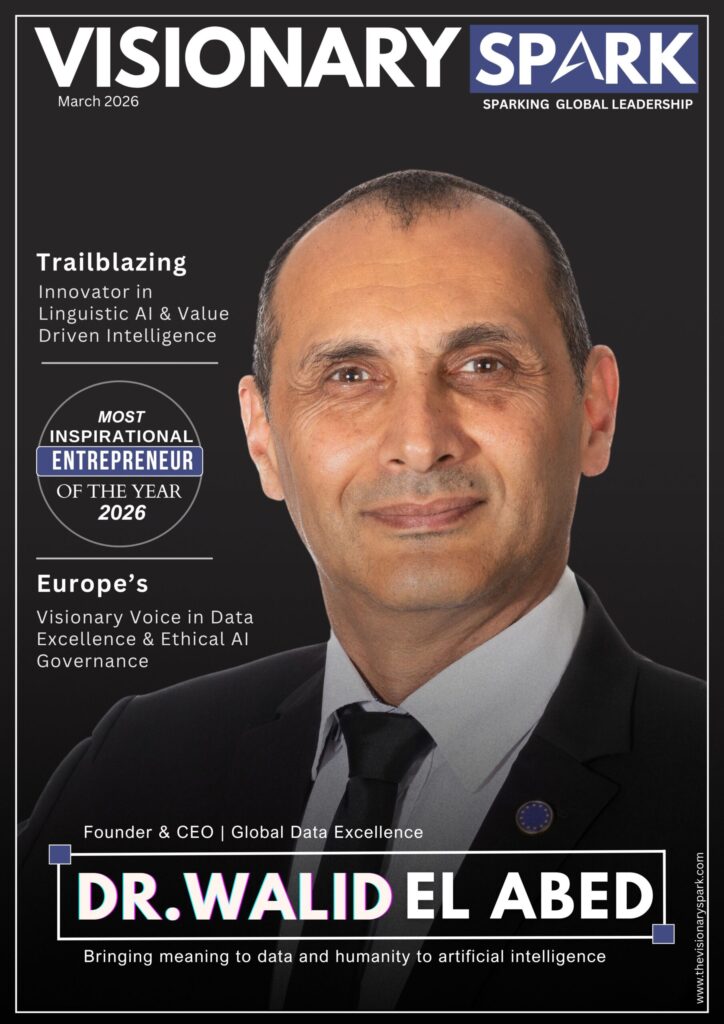
Born in the modest surroundings of a refugee camp under the protection of United Nations, Dr. Walid el Abed’s earliest experiences shaped a conviction that would define his life: language is identity, dignity, and survival. Those beginnings impressed upon him a profound truth — that understanding is the first form of human sovereignty. From them emerged a fascination that would follow him throughout his journey: the power of words to create coherence and the moral responsibility embedded within meaning.
“Linguistics taught me that every word carries intention,” Dr. Walid reflects. “Computer science showed me how structure can reveal truth. And philosophy taught me to ask why we create anything at all.”This triad of disciplines, linguistics, computer science, and philosophy, became the foundation of a new way of seeing artificial intelligence. His doctoral research, the Semantic Meta Model, reimagined data as a living language rather than a static set of numbers. That model evolved into DEMS-Nixus, the world’s first governance AI grounded in linguistic and meta-semantic principles.
For Dr. Walid, technology without human purpose is hollow. “AI must not only compute,” he explains, “it must understand meaning and serve humanity.” Every innovation he has since developed stems from a central belief: human values must not exist outside of technology, they must be woven into its very structure.
“Data is a language; governance is how we choose to speak it.”
At Nestlé headquarters in Switzerland, Dr. Walid managed data governance initiatives spanning 83 countries. What he witnessed there would spark a transformation in his thinking, and eventually, in global governance itself.“I saw organizations drowning in data yet starving for meaning,” he recalls. “They had massive systems, but decisions lacked coherence, ethics, and alignment.” The experience convinced him that the problem wasn’t technology; it was the absence of a unified framework that could translate data into values and values into measurable outcomes.
This realization led him to establish Global Data Excellence (GDE) in 2007, not as a traditional consultancy or software company, but as the birthplace of an entirely new discipline: Data Excellence Science. He envisioned a system where technology learns from human purpose, rather than dictating it, a philosophy he called Govern by Value. At its core, GDE unifies semantics, governance, ethics, compliance, sustainability, and business impact into a single intelligent framework. It is, as Dr. Walid describes it, “a science that allows enterprises to govern not by control, but by conscience.”
His years at Nestlé also taught him enduring lessons about the nature of governance, lessons that would become the philosophical and operational pillars of GDE.The first was simple yet profound: data without governance becomes chaos at scale. Fragmentation destroys trust, and without trust, data has no value. The second insight redefined the role of leadership itself: governance belongs to business leaders, not IT. By introducing data quality KPIs to Nestlé’sglobal executive dashboards, Dr. Walid shifted governance from a back-office function to a boardroom priority.
The final lesson was that governance must be dynamic and contextual. “Static rules cannot survive global complexity,” he explains. In a world defined by constant change, governance must evolve in rhythm with business, culture, and ethics.Ultimately, the greatest truth Nestlé revealed to him was that governance is not technical, it is ethical responsibility.
“Governance is not control, it is responsibility.”
Innovation and the Birth of DEMS-Nixus
In the realm of artificial intelligence, few innovations have redefined the relationship between data, ethics, and governance as profoundly as DEMS-Nixus. Created by Dr. Walid el Abed, it stands as the world’s first AI capable of governing by value in natural language, a system where technology does not merely process data, but interprets the moral and operational essence behind it.At the core of DEMS-Nixus lies La Machina, an intelligent kernel designed to transform human statements into operational governance logic, instantly and without a single line of code. With this, organizations can now articulate their business rules, ethical commitments, and compliance mandates in plain language and watch them executed in real time.Through DEMS-Nixus, ethics become measurable, compliance becomes automated, and sovereignty over data is preserved at every level of decision-making. It empowers leaders to translate intention into action, ensuring transparency, trust, and alignment with human purpose. As Dr. Walid describes it, “DEMS-Nixus doesn’t predict the future, it creates it by aligning every decision with human purpose.”
The roots of this revolutionary system trace back to 1996, when Dr. Walid el Abed developed Nixus, the first natural-language dialogue engine, long before conversational AI became part of mainstream technology. What began as a linguistic experiment evolved, decades later, into the backbone of a governance revolution.“Linguistics taught me context. Philosophy taught me intention. Computer science taught me execution,” says Dr. Walid, summing up the synthesis that drives his work. For him, language has never been just a user interface, it is the intelligence. By treating language as the architecture of understanding rather than a layer of communication, DEMS-Nixus enables machines to reason, interpret, and act in ways that are deeply human.
This convergence of language and logic has allowed DEMS-Nixus to move beyond data analytics or predictive modeling. It becomes, instead, an ethical and semantic companion to leadership, a bridge between meaning and action.When asked where imagination fits into science, Dr. Walid smiles at the question. “Science gives structure. Art gives possibility,” he says. “Innovation is the dance between them.”
Every breakthrough at Global Data Excellence has started with a question of imagination, the kind that challenges the very assumptions of technology. What if governance could speak every language? What if compliance could enforce itself? What if technology could protect dignity? What if AI could be sovereign, ethical, and explainable?It is this visionary curiosity that fuels his innovation. Each “what if” becomes a design principle, each idea a step closer to realizing technology that respects humanity as much as it empowers it.
“Imagination asks the questions; science builds the answers.”
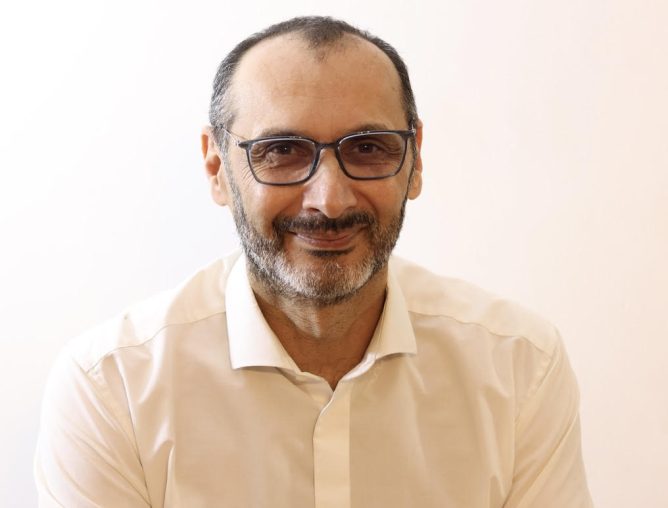
Global Data Excellence
When Dr. Walid el Abed founded Global Data Excellence (GDE) in 2007, he envisioned more than a company, he envisioned a movement. What began as a pioneering idea in Geneva has since evolved into a global force reshaping how organizations govern, measure, and humanize data.Over the years, GDE has reached milestones that reflect both innovation and integrity. Recognized by Gartner’s Magic Quadrant and Hype Cycle, it has been listed among the Top 5 Innovative Companies to Watch in 2023 and honored with the Sustainable AI Governance Platform Award in the same year. Its impact has resonated across the world, from governments adopting DEMS-Nixus for ethical governance, to Fortune 500 companies leveraging its frameworks for responsible performance.
The company’s achievements also extend into research and national innovation. GDE received the Innosuisse Innovation Check for its pioneering work in sovereign digital identity, while its breakthroughs in semantic and governance AI continue to set new benchmarks for explainability and ethical automation. Featured in international media outlets such as CIO Look and Business Talk, GDE has transcended industry boundaries, becoming synonymous with the principle of “governing by value.”At the heart of GDE’s philosophy lies Govern-by-Value, a model that merges performance with ethics, not as parallel goals, but as inseparable forces.
As Dr. Walid el Abed explains, “Govern-by-Value operationalizes ethics.” Through DEMS-Nixus, human values become executable rules and Key Value Indicators (KVIs), translating moral principles into measurable outcomes. The platform automates compliance with international standards while maintaining a clear ethical compass at the data-record level.In this model, profit meets responsibility. Sustainability becomes quantifiable. Every business decision, whether strategic, operational, or digital, is grounded in transparency and purpose. For Dr. Walid, the harmony between value creation and ethical stewardship is not a dream of the future; it is the operating logic of tomorrow’s most trusted institutions.
Looking forward, Dr. Walid envisions the next era of GDE as one defined by sovereign AI ecosystems, particularly for developing nations seeking to reclaim digital independence. His vision extends beyond technology into global collaboration.“The next frontier,” he says, “is national AI governance infrastructures that protect sovereignty, ensure ethical alignment, and harmonize rules across borders.” He foresees the creation of a global Value-AI Alliance, a network dedicated to establishing standards of transparency, fairness, and human-centric innovation worldwide.One of his most ambitious ideas is the development of frameworks where digital human rights are not just declared, but enforced through explainable AI systems. These systems would make ethical governance not an aspiration, but an executable reality, ensuring that as AI grows in power, it remains accountable to humanity.
“The future of AI is sovereign, ethical, and human-centric, or it has no future at all.”

The “Govern by Value” Philosophy
For Dr. Walid el Abed, “Govern by Value” is far more than a methodology; it is the ethical operating system of the digital age. At its core, it transforms the way organizations see, measure, and act on what truly matters. In practice, it means establishing a single governed truth, one that unifies financial, ethical, and operational dimensions into a coherent whole.Through real-time insights that quantify both ethical and financial impact, enterprises can see the true consequences of their actions before they unfold. Automated compliance ensures that every decision aligns with both internal principles and external regulations. And through semantic alignment, strategy and execution finally speak the same language, ensuring that purpose does not get lost in process.
In this framework, governance ceases to be a bureaucratic burden; it becomes a living dialogue between values and outcomes. It is a system where meaning, not merely data, drives direction.When asked how he balances scientific rigor with ethics, Dr. Walid responds with elegant simplicity: “Through semantic transparency.”He sees science as the structure that gives method, ethics as the compass that gives direction, and semantics as the bridge that gives meaning. In this triad, each element strengthens the others. Science without ethics risks becoming cold calculation; ethics without science becomes idealism; and semantics, the study of meaning, ensures that data, algorithms, and governance remain aligned with human understanding.
For Dr. Walid, Data Excellence is not about efficiency alone; it is about integrity. It is the discipline through which data becomes not just useful, but responsible.That conviction is what leads Dr. Walid el Abed to one of his most profound beliefs: data can drive peace and sustainability.“Data reflects our societies,” he explains. “Governance shapes what it becomes.” In his view, ethical data amplifies justice, transparent data reduces corruption, and responsible data mitigates conflict. When data is governed by value, it becomes a force for equity and empathy rather than exploitation.To him, Data Excellence is a peace strategy, a way to align global decision-making with the moral rhythm of humanity. By governing through value, organizations don’t just become more sustainable; they become part of a broader social fabric that values truth, fairness, and purpose.
As artificial intelligence grows increasingly autonomous, Dr. Walid sees Govern-by-Value as the necessary anchor, the moral stabilizer in an era of machine independence.“Autonomy without purpose is dangerous,” he says. “AI does not need consciousness, but it requires conscience.” This distinction defines his approach to ethical AI. Consciousness belongs to humans, but conscience must be encoded into systems, through transparent logic, explainable outcomes, and value-aligned governance.Govern-by-Value gives AI a moral framework, not to think like humans, but to act for humanity.For many corporations, the challenge is not philosophical but practical. Yet, as Dr. Walid points out, results eliminate doubt.
Through DEMS-Nixus, organizations have achieved measurable transformations, including €1 billion in savings within eight days, €500 billion in asset cleansing, €127 million in fraud detection, and zero regulatory violations. These achievements prove that ethics is not a cost; it is a strategic advantage.By merging meaning with measurement, GDE demonstrates thatgoverning by value is not an abstract idea, it is a competitive necessity for any enterprise that seeks to thrive responsibly in the AI era.
“AI does not need consciousness, but it requires conscience.”
Academia, Ethics, and Human Connection
In his classrooms, Dr. Walid el Abed doesn’t teach theory; he teaches transformation. His lectures are laboratories of real-world change, where students grapple with actual governance models, compliance cases, and ethical frameworks. They are not merely learning about data, they are learning how to govern it responsibly.“I want my students to think like philosophers and execute like engineers,” says Dr. Walid, capturing the dual essence of his pedagogy. For him, education is not about producing technologists who can code; it’s about cultivating thinkers who can question why they code, and for whom. His students are encouraged to understand that every algorithm has an ethical footprint, every data model a social consequence.
Through this fusion of logic and philosophy, Dr. Walid has redefined the academic experience into an exploration of purpose, shaping future leaders who see technology not as a tool of control, but as an instrument of conscience.His human rights work further deepens this philosophy. As both a General Counselor and Ambassador for Human Rights and Peace, Dr. Walid el Abed has consistently emphasized that digital rights are, fundamentally, human rights.He believes that the systems we design must do more than process identities; they must protect them. Within DEMS-Nixus, this belief takes tangible form, an AI architecture that safeguards identity, dignity, non-discrimination, and accountability. It is governance that doesn’t just comply with regulation, but embodies compassion.
For Dr. Walid, technology’s highest purpose is not efficiency, it is empathy at scale. “Technology must protect humanity,” he insists. “If it does not, it serves no one.”When asked how AI can respect the deeper meaning of data, Dr. Walid returns to the principle that defines all his work: semantics. “Data carries memory, culture, and bias,” he explains. “AI must interpret responsibility, not just information.”
“Technology becomes ethical only when it understands the human soul behind the data.”
To him, every dataset is a mirror of humanity, reflecting our collective behavior, our histories, and our blind spots. True intelligence, therefore, lies not in prediction but in understanding. By embedding semantics into AI, Dr. Walid ensures that data retains its context, that machines don’t just learn patterns, but grasp purpose.As he looks toward the future, Dr. Walid el Abed sees education and governance as the twin engines of ethical progress. Governments, he argues, must establish sovereign AI infrastructures that protect nations from dependency and preserve digital sovereignty. At the same time, education systems must evolve to cultivate ethical, semantic, and responsible leaders, individuals who can bridge the divide between innovation and humanity.Only through this partnership between policy and pedagogy can the next generation build technologies that reflect our highest values rather than amplify our worst instincts.
“Digital rights are human rights, technology must protect humanity.”
Leadership, Transformation, and Legacy
For Dr. Walid el Abed, the evolution of intelligence, both human and artificial, must transcend imitation to embrace intention. He draws a clear distinction between two paradigms that define the future: Cognitive Intelligence and Value Intelligence.“Cognitive Intelligence imitates the brain,” he explains, “but Value Intelligence protects the soul.”
The next frontier, he believes, is not one or the other, but the harmony between them: Cognitive-Value Intelligence.
It is this union that defines his vision for the decades ahead, an AI that not only learns, but understands; one that does not merely calculate, but cares. In his philosophy, intelligence without value is machinery; intelligence with value becomes meaning.Through this perspective, Dr. Walid reframes the technological race from one of computation to one of conscience, a reminder that the measure of progress lies not in how fast we advance, but in how wisely we choose to.
When speaking to leaders, Dr. Walid el Abed distills transformation into a set of timeless principles. “Embed values. Demand transparency. Measure KVIs, not just KPIs.”To him, leadership is not defined by motion, but by meaning. In a world driven by data and speed, he reminds executives that leadership is not about how fast you move, it is about the direction you choose.Within his framework, Key Value Indicators (KVIs) replace traditional performance metrics, ensuring that decisions align not only with efficiency but with ethics. He encourages leaders to see governance as guidance, not control, as a discipline that transforms ambition into sustainable achievement.
Through Global Data Excellence, he continues to help leaders convert corporate strategy into ethical action, proving that the most future-ready organizations are those that govern with integrity, empathy, and purpose.Looking toward the next generation of innovators, Dr. Walid offers a message that feels both a challenge and a calling: Build AI that elevates humanity.For him, every dataset is not just information, it is a reflection of human life. “Every dataset carries a human story. Every algorithm shapes a destiny,” he says with quiet conviction.In his view, the future of AI is moral, not because it must mimic human judgment, but because it must be guided by human conscience. The true pioneers of tomorrow, he believes, will not be those who build the fastest systems, but those who design the wisest ones.
“The pioneers who matter will build not the fastest AI, but the wisest.”
Dr. Walid el Abed
Founder & CEO
Global Data Excellence
Follow Dr. Walid on: