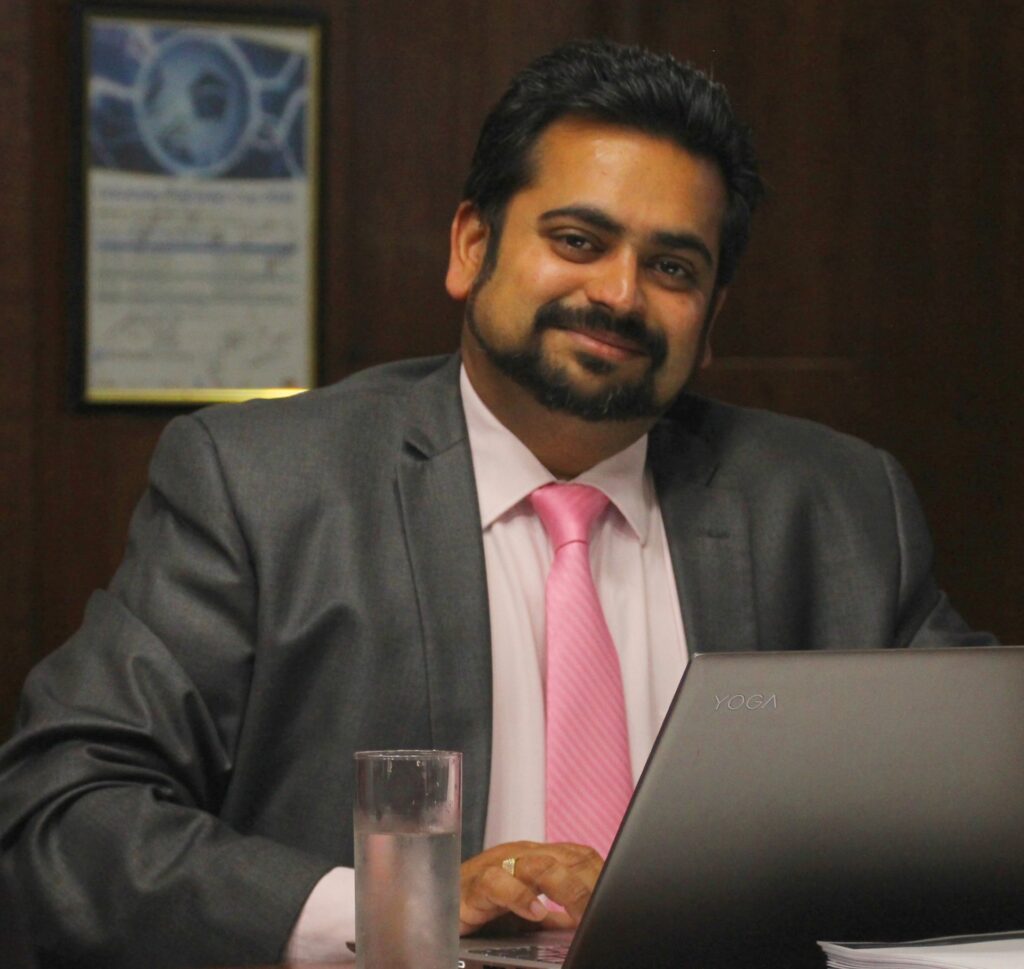

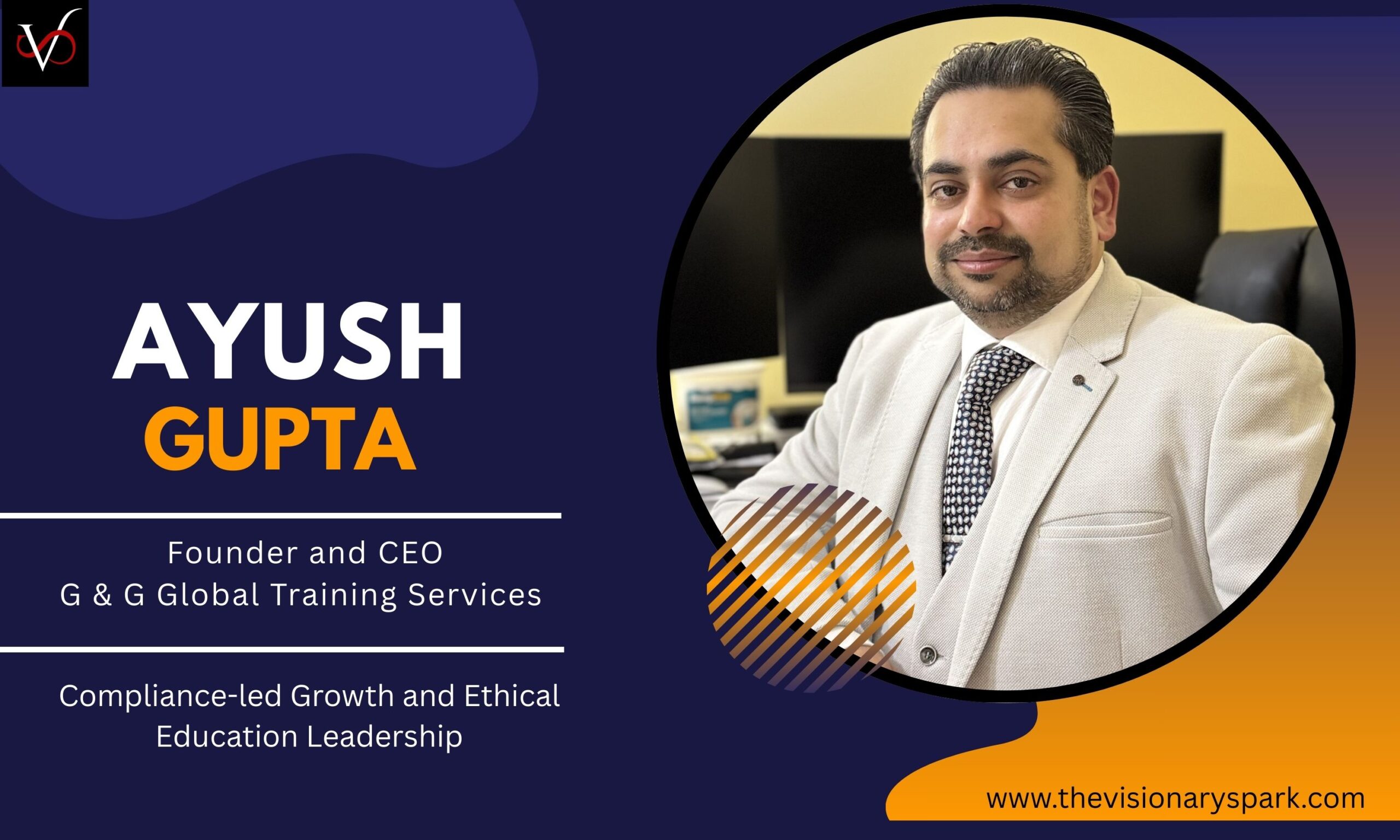
In an era where vocational education faces growing scrutiny, rapid globalisation, and evolving regulatory demands, Ayush Gupta stands out as a steady force of credibility, clarity, and purpose. As the Founder and CEO of G & G Global Training Services, Ayush has spent nearly two decades shaping the foundations of compliant, ethical, and future-ready education organisations across Australia and international markets. His work sits at the intersection of governance, compliance, and human impact, where regulatory rigour is not treated as a constraint, but as a catalyst for quality and long-term sustainability.
Based in Australia, Ayush is widely regarded as a trusted authority in the Vocational Education and Training sector, with deep expertise spanning establishing RTO’s, CRICOS and RTO compliance, ESOS frameworks, governance design, and strategic growth planning. From concept-stage registrations to complex regulatory audits, various delivery arrangements, and compliance rectifications, his career reflects a rare blend of technical mastery and practical implementation. Rather than advising from the sidelines, he builds systems in action, developing policies, staffing models, quality assurance systems, and operational structures that regulators expect to see functioning in practice, not merely documented on paper.
Founded in 2006, G & G Global Training Services was established with a clear and uncompromising purpose: to help education businesses enter and operate within the Australian VET sector with integrity, confidence, and long-term viability. Ayush rejects shortcut-driven or template-based approaches, choosing instead to work closely with clients to design bespoke, regulator-ready RTO models that are commercially sound, student-centred, and genuinely aligned with industry needs. For investors and education leaders alike, working with GNGGTS is not about securing approvals quickly, but about building institutions that can withstand regulatory change, market pressure, and global expansion without compromising credibility.
Beyond consultancy, Ayush is an active thought leader and sector contributor. As a member of the Forbes Business Council, he engages in global dialogue on education reform, governance, compliance, strategy, and organisational growth. His participation reflects a broader commitment to ethical leadership, continuous improvement, and raising standards across the education and business landscape. Recognition, however, is never the end goal. For Ayush, influence carries responsibility, to mentor leaders, shape better systems, and advocate for vocational education models that balance regulation, innovation, and human outcomes.
At his core, Ayush Gupta represents a leadership philosophy grounded in trust. Trust in systems, trust in people, and trust earned through consistency, integrity, and delivery. When organisations partner with G & G Global Training Services, they are not simply engaging a consultant to “get an approval.” They are aligning with a leader who understands the regulator’s role, respects the responsibility of education providers, and is committed to building institutions that are credible, compliant, and sustainable for long term.
Foundations & Purpose
Ayush Gupta’s journey into vocational education and training was shaped by witnessing the tangible, life-changing power of practical skills. Early in his career, he observed a persistent gap between traditional education pathways and the real need of industry. Many individuals were motivated and capable, yet lacked access to job-ready, industry-aligned training. At the same time, employers struggled to find skilled workers who could contribute from day one. For Ayush, vocational education sat at the critical intersection where learning translates directly into employment, productivity, and economic growth.
As his work expanded across industries, regulators, and international education partners, this belief only deepened. He saw firsthand how quality, compliant, and student-focused vocational education could create immediate and meaningful outcomes. Whether supporting learners into aged care, childcare, hospitality, horticulture, health services, or business roles, the impact was visible and measurable. What continues to drive him is the opportunity to build credible training systems, mentor education providers, and create clear pathways for both domestic and international students to develop skills, confidence, and sustainable careers. For Ayush, vocational education is not simply about qualifications; it is about empowerment, workforce development, and nation-building.
That same clarity of purpose led to the founding of G & G Global Training Services in 2006. Ayush set out to address a fundamental challenge within the VET sector: the disconnect between regulatory compliance, quality training delivery, and genuine workforce outcomes. At the time, many providers had strong intentions but struggled to navigate Australia’s complex regulatory environment. Others focused narrowly on compliance, often at the expense of student experience, industry relevance, and long-term sustainability. This imbalance eroded confidence across the sector and limited outcomes for learners and employers alike.
G & G Global Training Services was established to bridge that gap. Ayush’s vision was to help education providers build robust, compliant, and future-ready RTOs that genuinely serve both learners and industry. This meant going beyond advising on regulatory requirements, CRICOS frameworks, and governance structures. It involved embedding quality systems, strengthening training and assessment practices, and championing ethical, student-centred approaches from the outset. At its core, the mission was clear: to ensure vocational education remains credible, trusted, and outcome-driven, so students gain meaningful skills, providers operate with confidence, and employers receive a workforce that is truly job-ready.
Leadership Philosophy & Values
For Ayush Gupta, “Safety Begins with Compliance” is not a slogan but a foundational leadership principle that shapes how he makes decisions, builds teams, and supports education providers. In a sector where compliance is often perceived as a regulatory burden, he views it instead as a source of strength. Strong compliance frameworks, in his view, create safety for students, staff, employers, investors, and for the reputation of the vocational education sector itself. When systems are compliant, risks are identified early, accountability is clear, and quality becomes consistent rather than incidental. This belief drives Ayush to lead proactively, embedding governance, policies, and compliance-led cultures into everyday operations, rather than treating regulation as a last-minute audit exercise. The result is psychological safety for teams, operational confidence for providers, and trust among regulators and industry partners.
This principle also defines how he mentors leaders and organisations. Ayush consistently encourages a shift in mindset, from seeing compliance as a constraint to recognising it as an enabler of innovation and growth. When compliance is done well, organisations can scale sustainably, enter new markets, and build international partnerships without compromising integrity or student outcomes. His leadership is grounded in the belief that strong compliance naturally leads to consistent quality, and when quality is embedded, safety, trust, and long-term success follow.
That same philosophy underpins Ayush’s transformational leadership style, particularly his ability to balance rigorous standards with genuine empathy. He does not see compliance and empathy as opposing forces; instead, he views them as mutually reinforcing. Compliance establishes the non-negotiable standards that protect people and institutions, while empathy shapes how those standards are implemented and sustained. Ayush begins by listening. Many compliance gaps, he notes, stem not from negligence but from pressure, lack of clarity, limited capability, or fear of making mistakes. By understanding the human context behind an issue, he focuses on addressing root causes rather than symptoms.
While he remains firm and uncompromising on regulatory expectations, Ayush places equal emphasis on building capability rather than assigning blame. This means coaching teams, simplifying systems, providing practical tools, and creating environments where people feel safe to ask questions and raise risks early. For him, transformational leadership is about bringing people along on the journey, helping them understand why compliance matters, how it protects their work, and how it ultimately improves student outcomes. When individuals feel respected, supported, and empowered, compliance shifts from being enforced to being owned. It is this balance, firm on standards yet human in approach, that enables organisations to grow ethically, sustainably, and with confidence.
Navigating Compliance & Industry Challenges
After working with hundreds of Registered Training Organisations, Ayush Gupta consistently sees one fundamental mistake repeated across the sector: compliance is treated as a one-off event rather than a living, embedded system. Too often, organisations focus heavily on initial registration, audits, or rectifying non-compliances, then slip back into business as usual. Policies may look strong on paper, but they are not consistently implemented, reviewed, or understood by staff, creating a gap between documented systems and real training and assessment practice.
Closely tied to this is the way validation and continuous improvement are misunderstood. Instead of being used as quality mechanisms that strengthen assessment integrity, trainer capability, and industry relevance, validation is frequently reduced to a box-ticking exercise. When validation is not systematic and evidence-based, risks quietly accumulate until an audit exposes them. Ayush also notes that many RTOs underestimate the importance of shared ownership. Compliance is often isolated to one individual or an external consultant, rather than embedded across leadership, trainers, and administrators. When knowledge lives with people instead of systems, sustainability becomes fragile. In his experience, organisations that succeed are those that embed compliance into daily operations, leadership accountability, and decision-making, making quality and regulatory alignment part of how the RTO operates, not something it prepares for only when ASQA is at the door.
For leaders struggling to move beyond a “tick-box” compliance mindset, Ayush’s advice is clear and deliberately practical. He urges leaders to stop asking “What does ASQA want to see?” and instead ask “What does quality look like for our students and industry?” That shift, he says, changes everything. To support it, he consistently points to a set of principles that help organisations move from performative compliance to sustainable quality:
- Reframe compliance as a quality system, not a checklist.
Standards are not obstacles; they are minimum benchmarks for delivering safe, ethical, and effective training. When compliance is aligned with student outcomes, assessment integrity, and industry relevance, it becomes purposeful rather than performative. - Embed compliance into daily operations.
If compliance exists only in policies or with one designated “compliance person,” it will always feel burdensome. Embedding it into trainer induction, staff meetings, validation schedules, and management decisions ensures shared ownership and long-term sustainability. - Invest in capability, not just documentation.
Well-written policies do not deliver quality; competent people do. Upskilling trainers, assessors, and administrative teams helps them understand not only what is required, but why it matters. Confidence reduces shortcuts and compliance fatigue. - Use validation and internal audits as improvement tools.
Validation should be a learning exercise, not a fear-driven activity. Honest findings, open discussion, and documented improvement strengthen both compliance outcomes and organisational culture. - Lead by example.
Culture starts at the top. When leaders prioritise integrity, evidence-based decisions, and student-first thinking, even when it is inconvenient, teams follow.
Ultimately, Ayush believes that RTOs that move beyond tick-box compliance are those that build cultures of accountability, curiosity, and continuous improvement. When compliance supports quality rather than competes with it, it stops feeling like a burden and becomes a genuine strategic advantage.
Building Teams & Driving Excellence
For Ayush Gupta, building high-performing education teams begins with a clear belief: skills can be developed, but mindset and integrity are foundational. Leading across highly regulated, people-driven environments has shaped his focus on qualities that balance professional rigour with human values, always anchored in quality outcomes. In education, he believes, trust is everything, and strong teams are built deliberately, not accidentally.
When assembling and leading teams, Ayush consistently prioritises a core set of qualities:
- Integrity and accountability.
Trust underpins education. Ayush looks for individuals who take ownership of their responsibilities, respect regulatory obligations, and do the right thing even when no one is watching. - Learner-centred thinking.
High-performing teams continuously ask how decisions improve learner outcomes. Whether in training delivery, assessment, compliance, or administration, student impact remains central. - Compliance literacy with practical judgment.
Not everyone needs to be a compliance expert, but everyone must understand how their role contributes to compliance. Ayush values people who apply standards thoughtfully rather than mechanically. - A continuous improvement mindset.
The strongest teams are curious, reflective, and open to feedback. Validation, audits, and reviews are seen as opportunities to improve, not threats to defend against. - Collaboration and respect.
Education, he notes, is a team sport. Sustainable outcomes come from trainers, assessors, compliance professionals, and leaders working together with mutual respect and clear communication. - Adaptability and resilience.
With constant regulatory shifts, industry change, and evolving student needs, high-performing teams remain calm under pressure and respond constructively to change. - Empathy combined with professionalism.
Ayush values leaders and team members who support colleagues and students with empathy, while maintaining consistency, fairness, and high standards.
When these qualities are present, teams do more than meet standards. They build trust, deliver meaningful education, and sustain excellence over time.
That same philosophy shapes how Ayush drives continuous improvement without creating compliance fatigue. He is deliberate about how improvement is positioned, paced, and led. First, he separates improvement from fear. When compliance is framed purely around avoiding non-compliance or surviving audits, engagement drops. Instead, he anchors improvement to better student outcomes, smoother operations, and reduced risk, ensuring effort feels purposeful rather than exhausting.
He also focuses on small, meaningful improvements rather than constant overhauls. Continuous improvement, in his view, does not mean continuous change. Prioritising a few high-impact actions each cycle and closing them properly builds momentum without overwhelming teams. Crucially, improvement is integrated into existing rhythms of work, not layered on top. Validation outcomes inform trainer development, student feedback shapes delivery, and internal audits align with business planning. When improvement becomes part of everyday operations, fatigue reduces significantly.
Capability and autonomy play an equally important role. When people understand standards and are trusted to make informed decisions, they feel empowered rather than policed, reducing reliance on excessive documentation and repetitive checks. Ayush also leads by example, remaining clear on non-negotiable compliance requirements while celebrating progress, recognising effort, and allowing space for reflection. In highly regulated environments, recognition matters.
In practice, Ayush believes continuous improvement thrives when it is focused, human, and outcome-driven. When teams feel supported and see real impact, compliance stops being draining and becomes part of a healthy, sustainable culture.
Impact, Recognition & Global Reach
One defining moment in Ayush Gupta’s career involved an RTO that approached his team in a highly vulnerable state. The organisation was facing serious regulatory scrutiny, declining enrolments, and an exhausted, defensive leadership team. Compliance had become a crisis response rather than an operating principle, and staff morale was at its lowest. Instead of beginning with documentation, Ayush deliberately started with governance and leadership accountability. The focus was on helping the board and executive team clearly understand their obligations under the Standards, identify where leadership decisions, not just processes, had created risk, and reset expectations around ownership. That shift alone changed the tone of the organisation, moving it from blame to responsibility.
From there, a compliance-led operating model was embedded across the institution. Training and assessment practices were rebuilt around evidence and industry validation, ensuring quality and relevance. Roles and delegations were clarified so accountability was visible and understood at every level. Internal audits and validation were scheduled, owned by teams, and integrated into operations rather than outsourced or avoided. Compliance reporting became a standing agenda item at leadership meetings, reinforcing its role in governance rather than crisis management.
What ultimately made the transformation successful was how it was led. Standards were non-negotiable, but the approach was transparent, supportive, and capability-focused. Staff were supported to understand why changes were necessary, and early wins were recognised. Within twelve months, the organisation moved from survival mode to stability. Regulatory concerns were resolved, student outcomes improved, staff confidence returned, and enrolments recovered. More importantly, compliance stopped being reactive; it became the foundation of how the institution governed and operated. For Ayush, the experience reinforced a belief he carries into every engagement: strong compliance leadership does more than prevent failure; it creates the conditions for trust, recovery, and sustainable growth.
Recognition of that work came in the form of Ayush’s membership in the Forbes Business Council, which he views not as a destination, but as a platform of responsibility and influence. The recognition reflects decades of work across vocational education, governance, and compliance, and affirms his belief that ethical leadership, strong regulatory frameworks, and student-centred education can coexist with sustainable business growth. For him, the value lies less in personal achievement and more in elevating conversations around quality and integrity within the VET sector.
The global platform provided by the Council allows Ayush to be a part of thought leadership, engage with senior leaders across industries, and advocate for stronger governance, better policy alignment, and workforce-focused education models, particularly in skills-shortage sectors. Most importantly, it reinforces his commitment to giving back, mentoring emerging leaders, shaping sector dialogue, and influencing how education businesses balance compliance, innovation, and human impact. In that sense, the recognition represents both acknowledgement of the journey so far and a renewed obligation to lead with purpose.
That same commitment underpins how G & G Global Training Services supports clients operating across global education markets. The organisation combines deep regulatory expertise, robust governance frameworks, and culturally informed delivery models to help institutions expand internationally with confidence and integrity. At the foundation, clients are supported to meet Australian regulatory requirements, including ASQA, CRICOS, ESOS, and AQF obligations, while aligning those standards with the legal, cultural, and operational realities of various delivery models.
G & G Global Training Services supports clients across the full lifecycle of global operations, including:
• RTO and CRICOS establishment and readiness, with strong governance, risk management, and compliance systems
• Various delivery models, ensuring alignment with Standards, contractual clarity, and quality assurance
• Training and assessment system design mapped to industry needs and local workforce pathways
• Regulatory audits, rectifications, and continuous improvement frameworks
• Leadership and staff capability building, ensuring compliance and quality are owned internally rather than outsourced
A key differentiator is the organisation’s focus on ethical internationalisation. Working closely with partners across Asia and other regions, Ayush ensures student protections, assessment integrity, and workforce outcomes are preserved regardless of geography. Ultimately, G & G Global Training Services enables institutions to operate globally without diluting standards, ensuring that quality, compliance, and trust travel with the brand. The result is sustainable growth, strong international partnerships, and credible global education institutions.
Future Vision, Mentorship & Legacy
In Ayush Gupta’s experience, strong compliance has a far more direct impact on student engagement and outcomes than many organisations realise. At its core, effective compliance creates consistency, clarity, and trust. When compliance is properly embedded, students encounter clear expectations from the very beginning, through accurate marketing, transparent enrolment processes, structured training plans, and fair assessment practices. This clarity reduces confusion and anxiety, allowing learners to focus on learning rather than navigating uncertainty. Strong compliance also underpins quality training and assessment. Requirements around trainer competence, industry engagement, validation, and assessment integrity ensure that learning remains relevant, current, and meaningful. When students can clearly see the connection between their training and real employment pathways, engagement rises naturally.
Equally important is the role compliance plays in student support. Well-designed, compliant systems ensure learner needs are identified and addressed early, whether through language, literacy and numeracy support, reasonable adjustments, or welfare and progression monitoring. Students who feel supported, treated fairly, and heard are more likely to persist, complete their programs, and succeed. Above all, compliance builds trust. When processes are consistent, feedback is acted upon, and outcomes are credible, students become active partners in their own learning journey. In this sense, compliance does not sit quietly in the background; when done well, it shapes the entire student experience, driving higher retention, stronger completion rates, greater confidence, and meaningful employment outcomes.
Mentorship, another recurring theme in Ayush’s leadership journey, is something he approaches with equal clarity and intention. For him, being a good mentor is not about creating dependence, but about building capability. It means helping people think clearly, act confidently, and grow sustainably. Rather than simply providing answers, he focuses on asking the right questions, guiding individuals to understand the why behind decisions, particularly in complex, highly regulated environments like education. When mentees can connect purpose, compliance, and outcomes, they develop the confidence to lead independently.
Ayush also believes mentorship must balance honesty with empathy. He is direct about risks, gaps, and hard truths, while remaining respectful and supportive. Protecting confidence while challenging thinking is, in his view, essential for genuine growth. Mentorship must also be practical and grounded in reality, acknowledging regulatory pressure, limited resources, cultural dynamics, and stakeholder expectations. Ultimately, success as a mentor is not measured by being needed, but by seeing others lead ethically, make sound judgments, and uphold high standards long after the mentoring relationship ends.
Looking ahead, the impact Ayush hopes to leave on vocational education, both in Australia and globally, centres on trust, credibility, and sustainability as non-negotiable foundations of the sector. In Australia, he envisions a VET system where compliance is embedded as quality rather than feared as regulation, supported by strong governance, confident leadership, and consistently student-centred, industry-aligned outcomes. If his work helps even a portion of RTOs move from reactive compliance to mature, ethical operations, he believes it strengthens the reputation of the entire sector.
Globally, his ambition is to support the responsible internationalisation of vocational education. Cross-border education, he stresses, should build local capability and workforce outcomes, not dilute standards or exploit demand. Beyond systems, his focus remains firmly on people. Ayush hopes to leave behind leaders, compliance professionals, and educators who think critically, act ethically, and mentor the next generation. Systems may evolve, but culture endures, and his ultimate legacy is a VET sector at home and abroad that is respected by regulators, trusted by students, valued by industry, and led with integrity.
As the sector moves into 2026, Ayush offers clear guidance to young professionals and aspiring leaders seeking meaningful, future-ready careers in education, training, and other compliance-driven industries. His advice is anchored in depth, purpose, and long-term thinking:
- Master the fundamentals before chasing titles.
Deep understanding of standards, legislation, ethics, and risk builds credibility over time and positions professionals as trusted advisors rather than task-doers. - See compliance as a leadership skill.
In regulated industries, compliance is a strategic capability. Leaders who can balance regulation, people, and outcomes will always be in demand. - Stay close to the end user.
Whether working with learners, clients, or communities, impact is ultimately measured at the human level, not in systems alone. - Invest in continuous learning and reflection.
The pace of change will only accelerate. Ongoing learning, feedback, and self-reflection sustain relevance and effectiveness. - Choose integrity over shortcuts.
Reputation travels faster than résumés. In compliance-driven sectors, trust is the most valuable currency and must be protected. - Seek mentors and become one early.
Learning from experience sharpens judgment, while sharing knowledge builds leadership capacity. - Think long term.
Future-ready careers are built to withstand regulatory change, market disruption, and global shifts without compromising values.
For Ayush, combining technical competence with ethical judgment and empathy does more than build careers. It builds influence, resilience, and lasting impact, not just in education, but in any regulated industry.
Ayush Gupta
Founder and CEO,
G & G Global Training Services
Read Digital issue: Here
Follow Ayush Gupta on: