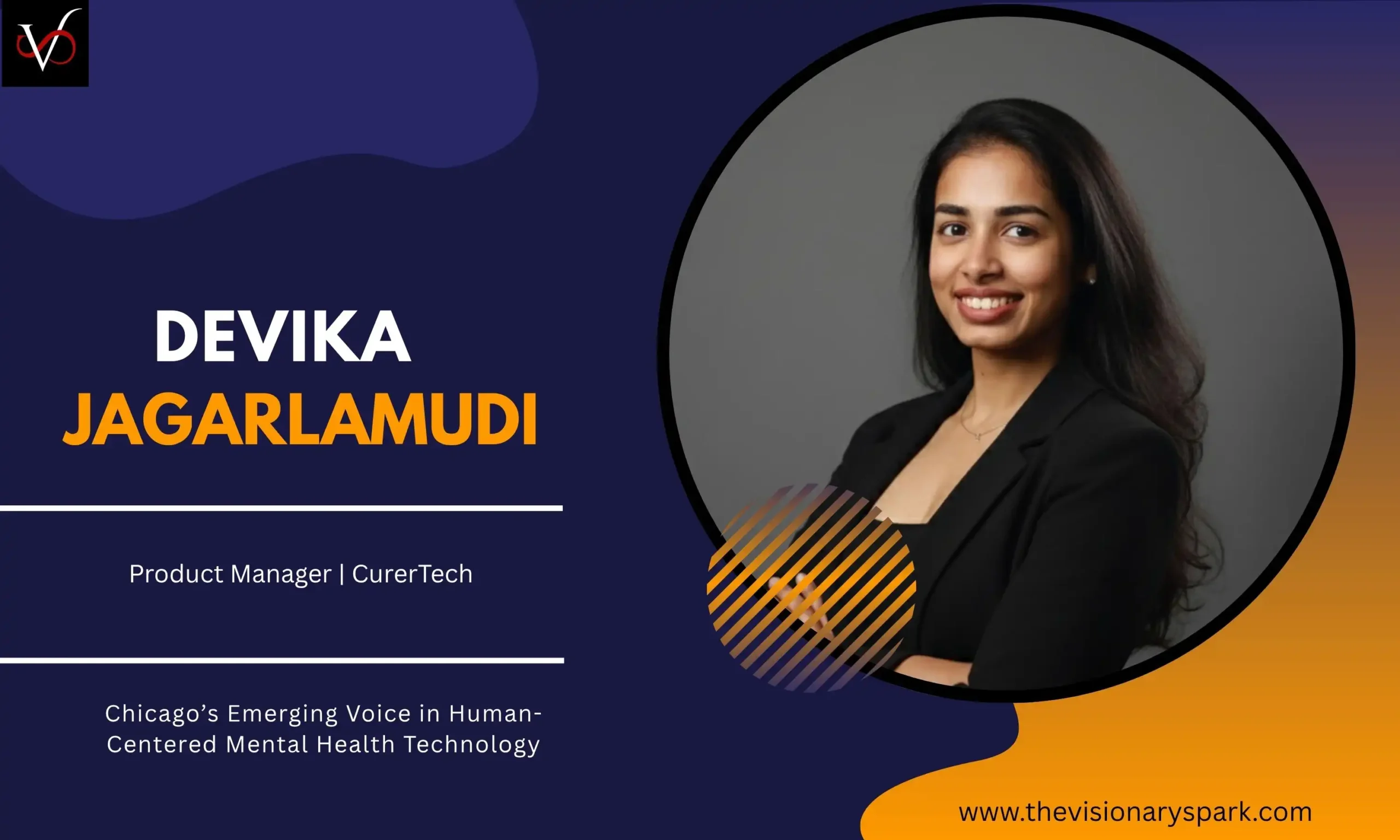
Devika Jagarlamudi represents a new generation of healthcare innovators who are redefining how care is delivered, experienced, and improved. With a foundation in dentistry and a deep understanding of clinical environments, she has transitioned into the world of health informatics and product management with a clear purpose, to bridge the gap between care and technology. Today, as a Product Manager at CurerTech, she works at the intersection of data, empathy, and innovation, building solutions that empower clinicians and enhance patient outcomes.
Her journey is shaped not just by technical expertise, but by lived clinical insight. Having experienced firsthand the inefficiencies that burden healthcare systems, she brings a rare ability to translate real-world challenges into meaningful digital solutions. Devika’s work is guided by a simple yet powerful belief: technology should support care, not complicate it. Through her efforts, she continues to champion a more human-centered, efficient, and accessible future for healthcare, one where innovation strengthens connection rather than replacing it.
The Journey: From Clinical Roots to Digital Impact
Devika Jagarlamudi’s journey into healthcare technology begins not in a boardroom, but at the patient’s chair. Trained in dentistry, she was drawn to the human side of care, where real connections shaped her understanding of healthcare. Yet alongside those moments, she began to notice a deeper challenge, fragmented systems, time-consuming documentation, and workflows that pulled attention away from patients.
“I started my career in dentistry, where I really connected with patient care and the human side of healthcare. But over time, especially during my work in clinical research, I began noticing how many inefficiencies existed behind the scenes.”
What began as observation soon became curiosity, and then purpose. Her move into clinical research allowed her to step back and see the bigger picture, identifying gaps and inefficiencies, but also recognizing a key limitation, the distance between understanding problems and solving them.
“That curiosity led me into health informatics, where I could explore how data and technology could improve care.”
Health informatics became her bridge between insight and action. Still, for Devika, understanding was never enough. She wanted to build solutions that could create real impact.
“I wanted to not just understand problems, but actually help build solutions.”
The turning point came when she realized that identifying gaps was only the beginning. She was drawn to implementation, to seeing ideas translate into tools that clinicians could actually use.
“I wanted to see something go from idea to implementation and know it was making a difference in real clinical settings.”
That shift led her into product management, where her clinical insight and technical curiosity converged. Today, her clinical roots remain central to how she builds, grounding every decision in empathy, usability, and real-world relevance.
“Having been on the clinical side, I understand how busy and mentally demanding those environments are.”
Her approach is guided by simple but powerful questions:
“Does this actually make someone’s day easier? Is this reducing effort, or adding to it?”
For Devika, technology is not just about capability; it is about clarity, efficiency, and ultimately, care. Her journey reflects a broader shift in healthcare, where those who understand the system from within are best positioned to transform it, turning lived experience into meaningful, human-centered innovation.
Philosophy: Human-Centered Innovation in Healthcare
At the core of Devika Jagarlamudi’s work is a simple yet powerful belief: healthcare is, first and foremost, about people. In a space increasingly shaped by technology, she remains grounded in the idea that digital tools should support human connection, not complicate or replace it. For her, human-centered innovation is not a trend, but a responsibility, every system must answer one question: does it make care more meaningful or more mechanical?
“For me, it’s about remembering that healthcare is ultimately about people. Technology should support that, not get in the way.”
Her approach favors simplicity over complexity. Rather than building systems that overwhelm, she focuses on creating experiences that feel intuitive and almost invisible, allowing clinicians to stay present with their patients.
“If a tool feels complicated or impersonal, it can take away from the connection between provider and patient.”
A key part of her role is bridging the gap between clinicians and developers. By translating between these two worlds, she ensures that technology is both technically sound and grounded in real clinical needs.
“A big part of my role is acting as a translator.”
“Creating that shared understanding and keeping communication open is what really helps.”
This human-centered thinking also extends to reclaiming time for care. Devika recognizes the burden of administrative work in healthcare and focuses on reducing it through thoughtful design.
“There’s a lot of repetitive work in healthcare documentation, scheduling, follow-ups.”
“Digital tools can take a lot of that off therapists’ plates.”
Even small improvements can have a meaningful impact, freeing clinicians to focus where it matters most.
“Even small improvements… can free up time and energy so they can focus more on their patients instead of paperwork.”
For Devika, true innovation is not about complexity, but about how seamlessly technology fits into the care experience, enabling clinicians to be more present, more effective, and ultimately, more human.
Execution: Building Impactful Solutions at CurerTech
At CurerTech, Devika Jagarlamudi’s work moves from ideas into real-world systems that clinicians rely on daily. It is here that her philosophy is tested, where empathy meets regulation, and innovation must prove its value in practice. Her focus is clear: technology should not just work; it should fit seamlessly into care.
One of her biggest challenges is balancing compliance with usability. Rather than treating regulations as a burden, she builds them into the workflow itself.
“It’s definitely a challenge. Compliance is non-negotiable, but that doesn’t mean the experience has to suffer.”
“When done right, users don’t feel it, they just follow a process that already aligns with requirements.”
Introducing AI brings a different challenge, trust. In high-stakes clinical environments, adoption depends on confidence and clarity.
“One of the biggest challenges is trust.”
“People need to feel confident in what AI is doing and understand how it’s helping them.”
Her approach is to integrate AI naturally into existing workflows, ensuring it supports rather than disrupts.
“Making sure AI fits into existing workflows rather than disrupting them.”
Used well, AI becomes a tool for more personalized care, helping identify patterns and guide better decisions without replacing clinical judgment.
“AI can help identify patterns that might not be immediately obvious and support more tailored care.”
“The goal is to enhance decision-making, not take it over.”
For Devika, impact is not defined by one major milestone, but by consistent, meaningful improvements in everyday care.
“What I’m most proud of is working on solutions that genuinely make someone’s job easier or improve a patient’s experience.”
“It’s not always about one big milestone, it’s those small, meaningful impacts that add up over time.”
Her work reflects a simple but powerful idea: the best innovation is not the most complex, but the one that quietly improves care, one thoughtful solution at a time.
Top of FormBottom of Form
Execution: Guidance for the Next Generation
For Devika Jagarlamudi, building a career at the intersection of healthcare and technology is less about having a perfectly mapped path and more about embracing the unknown with intention. Her own journey, shaped by shifts across disciplines, reflects a mindset rooted in curiosity and continuous learning rather than rigid planning.
“Be open to learning and stepping into unfamiliar areas.”
She believes that some of the most meaningful opportunities emerge when individuals allow themselves to move beyond the boundaries of what they already know. In a field as dynamic as health technology, where clinical realities and digital innovation constantly evolve, adaptability becomes one of the most valuable strengths.
“You don’t need to have everything figured out from the start.”
This perspective offers reassurance to those who may feel uncertain about entering such a multidisciplinary space. Devika emphasizes that clarity often comes through experience, not before it. What matters more is the willingness to explore, to ask questions, and to remain engaged with both the human and technical sides of the industry.
At the core of her advice are three essential qualities, curiosity, empathy, and a genuine effort to understand two very different worlds. Healthcare demands compassion and contextual awareness, while technology requires structured thinking and problem-solving. It is the ability to navigate both that creates true impact.
“What really helps is curiosity, empathy, and a willingness to understand both sides, healthcare and tech.”
In her view, this combination is what sets apart professionals who simply work within the system from those who shape it. It allows them to build solutions that are not only innovative, but also meaningful and grounded in real needs.
“That combination can open a lot of doors.”
Ultimately, Devika’s guidance is not prescriptive; it is empowering. It encourages the next generation to approach their careers with openness, to see uncertainty as an opportunity rather than a limitation, and to recognize that the intersection of healthcare and technology is not just a field to enter, but a space to continuously grow within.
Vision Ahead: The Future of Mental Healthcare
For Devika Jagarlamudi, the future of mental healthcare is not defined by technology alone, but by how thoughtfully it is used to expand access, reduce stigma, and strengthen human connection. Her vision is grounded in a simple yet powerful aspiration: a world where seeking mental health support feels as natural and accessible as any other form of care.
“I hope to see mental healthcare become more accessible and less stigmatized, with technology playing a supportive role in that.”
She envisions a system that shifts from being reactive to proactive, where care does not begin only at the point of crisis, but is continuously supported through intelligent, responsive tools. In this future, digital innovation enables earlier intervention, more precise insights, and a deeper understanding of individual needs, allowing clinicians to move beyond generalized approaches toward truly personalized care.
“Ideally, care becomes more proactive, personalized, and easier to access when people need it.”
Yet, for Devika, the role of technology is not to dominate the care experience, but to quietly enhance it. She is mindful of the delicate balance between innovation and empathy, ensuring that digital systems do not become new barriers in an already complex space. Instead, they should dissolve friction, simplify access, and support both patients and providers in meaningful ways.
“If we can use technology to remove barriers instead of create them, that’s a future I’m excited about.”
Her vision reflects a broader shift in mental healthcare, one that integrates intelligence with compassion, and efficiency with understanding. It is a future where technology works in the background, enabling clinicians to focus on what truly matters, while empowering individuals to seek help without hesitation or fear.
In many ways, Devika’s outlook is both forward-thinking and deeply human. It reminds us that the true potential of digital innovation lies not in replacing care, but in making it more inclusive, responsive, and accessible for all.